
このサイトはアフィリエイト広告を利用しています。 This site uses affiliate advertising.
Culture
カルチャー(文化)
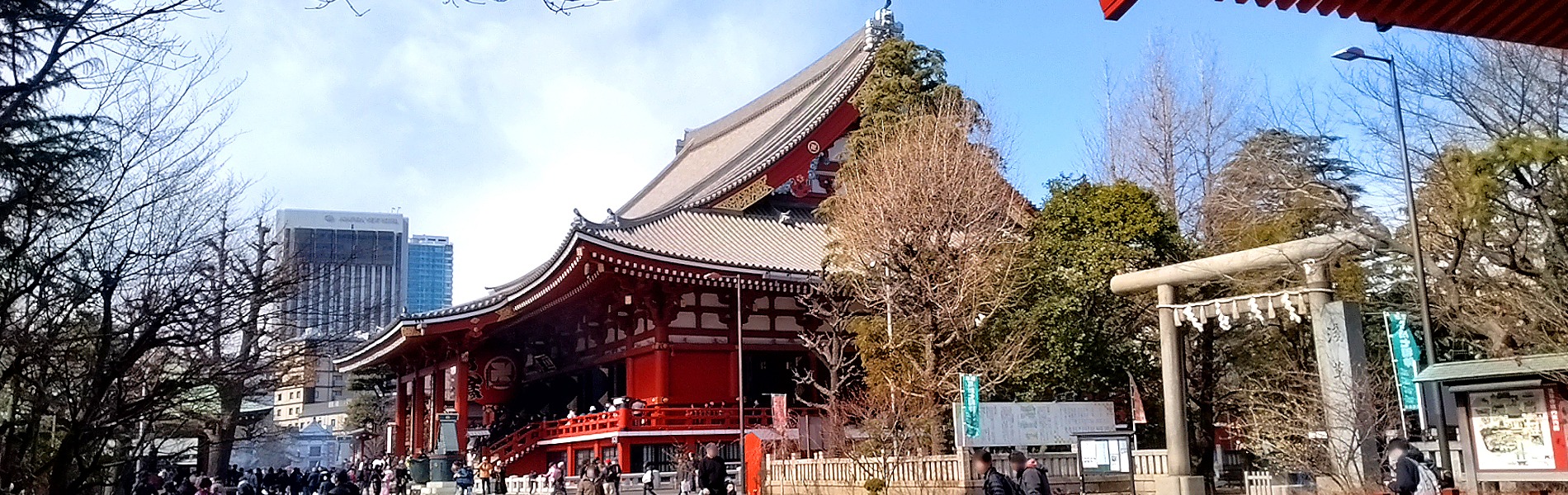
February 2025: Sensoji Temple, Asakusa, Taito Ward, Tokyo
2025年2月:東京都台東区浅草浅草寺


As for Japanese culture… I don’t really understand it.(;^ω^)
With these things in mind, I decided to start a website and tackle these issues myself.
Traditional cultural practices include tea ceremony, flower arranging, calligraphy, kendo, judo, archery, Noh, pottery, lacquerware, sumo, and carpentry(Sakan:左官).
The view of nature is one of respecting the natural flow rather than going against nature. Japan is a country prone to earthquakes and is located in one of the most earthquake-prone areas in the world, so perhaps it is natural for people to learn to live in harmony with nature.
Religion in Japan varies from person to person, but it is said that ancient Indian Buddhism was introduced via China and Korea, and then Japanese unique ideas were added to it, transforming it into a religion in which people “feel” the power of the gods, but there are also people who practice their own faith as individuals or within each family.
Japan’s architectural culture has traditionally used wood as the main material, using lightweight materials to give them strength through technology, but it is evolving every day based on experiences with earthquakes and fires.
Conversely, maintaining old buildings can sometimes take more money, time, and manpower.
As an island nation in a closed country, there was little communication with other countries, and the mainstream food culture was to eat a lot of fish and to grow rice and vegetables through agriculture, resulting in a self-sufficient diet. However, around 675 AD, Emperor Tenmu issued a ban on eating meat, and this culture of avoiding meat continued for about 1,200 years until the ban was lifted in 1871 (Meiji 4), and I believe that food culture has developed independently in each region of Japan.
Annual events include New Year’s Day (January 1st), Setsubun (February 3rd), Hinamatsuri (March 3rd), Tango no Sekku (May 5th), Ohigan (7 days in total, 3 days before and after the Vernal Equinox and Autumnal Equinox), Tanabata (July 7th), Obon (basically 4 days from August 13th to August 16th), and rituals and customs such as moon viewing. There are also rituals to mark ages and life milestones such as Shichigosan, Coming of Age Ceremonies, and 60th birthdays, which even I, as a Japanese person, do not fully understand.(;^ω^)
On top of that, there are things like Christmas and Halloween that are unique to Japan
(;´・ω・) I can’t keep up anymore.
The words “Wa:和” and “Yamato:大和” are often used to characterize Japanese culture, but I would like to introduce you to general Japanese culture as well as cultures that have developed uniquely.