このサイトはアフィリエイト広告を利用しています。 This site uses affiliate advertising.
Life
ライフ(生活)
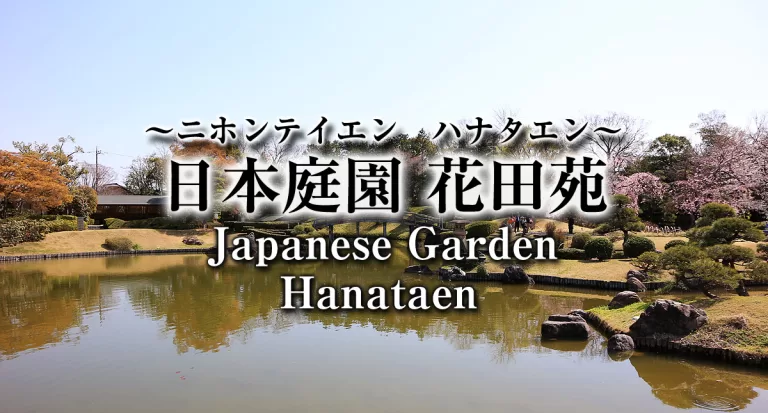
February 2025: Tojo Residence, Tojogaoka Historical Park, Matsudo City, Chiba Prefecture
2025年2月 千葉県松戸市 戸定が丘歴史公園 戸定邸



Life in Japan has the following characteristics:
Take off your shoes when entering a house
This is recognized worldwide, but nowadays, some people who design their own homes choose to allow guests to wear shoes inside some areas.
If there is a step(上がり框:Agarikamachi), I usually take my shoes off.
Greeting with a bow instead of a handshake
Some Japanese people will even ask for a handshake even if it’s their first time meeting you.
This is just my personal opinion, but I feel that once you meet someone for the first time and have a chat or a drink with them, shaking hands when saying goodbye has become the norm.
Use a signature stamp(印鑑:Inkan) for contracts, etc.
This can be a hassle, but it is also part of Japanese culture, and conversely, there are people overseas who have made stamps in Japan because signing is too much of a hassle.
Keep quiet on trains and in elevators
Come to think of it, I don’t remember being taught this as a child.
To begin with, Japan has good public safety standards compared to other countries, so there are many opportunities to be alone and people don’t make a lot of noise by themselves.
If you act excited and rowdy with your friends, everyone will just think you’re childish.
I also never talk on my cell phone, and if I have to answer a phone call on the train it’s only in an emergency,
and I don’t want other people to hear me, so if I do have to talk on the phone I get off the train first.
Before a meal, you say “Itadakimasu” and after a meal, you say “Gochisousama.”
“Itadakimasu” is a phrase used at the beginning of a meal to express gratitude to the people who provided the ingredients and the plants and animals that gave life to the meal, while “gochisousama” is a phrase used at the end of a meal to express gratitude to the people who prepared the food and those who were involved in getting the meal to you.
I’ve been eating alone a lot lately, so for some reason I felt like saying “itadakimasu” (thank you for the meal) and “gochisousama” (thank you for the meal).
Of course, there are people who say it, even if they are just one person.
Separate the garbage carefully
Trash cans at convenience stores and other stores do not allow household waste to be brought in, and only items purchased at the store are allowed in. Highway service areas and roadside stations also have rules that limit trash to items purchased within the service area.
People from overseas often come to Japan and hear that there are no trash bins in Japan, but you have to throw it away where you buy it, throw it away at home, or find out where you can take it to in your local municipality, and the way you separate your trash will vary depending on where you live.
Some areas have very strict rules for separating garbage.
When bathing in a public bath or hot spring, wash your body before entering the bathtub.
This is something that is commonly done at home before getting into the bathtub, but I wash my hair before getting in.
It depends on the person, but it’s a consideration to splash some hot water over your body before getting in, or if there’s a shower, to wash off any dirt from your body before getting in the bath with everyone else.
Japanese hot springs are famous, but I don’t like them.
I don’t like crowds and I find it tiring to have to worry about others or to be worried about others.
Close the doors of rooms you are not using
I feel like this has changed a lot since the coronavirus pandemic.。
Public places are ventilated, so if it’s empty from the start, you’ll just have to judge by the atmosphere of the place, such as not closing the door when you leave.
Eat with tableware in hand
There are countries overseas where this is considered bad manners, but even in Japanese cuisine there are dishes that are acceptable to hold and those that should not be held.
Lifting main dishes such as grilled fish, sashimi, and fried foods, as well as medium and large plates is considered bad manners.。
On the other hand, it is common to lift up rice bowls, rice bowls, soup bowls, small bowls (plates), and rice bowl dishes (beef bowl, pork cutlet bowl, unaju, etc.) before eating.
There’s no problem if you hold the ramen bowl and eat from it, but it is heavy, so it’s best to use a spoon(レンゲ:Renge) properly and slurp up the soup with both hands.
I haven’t finished drinking the broth from a ramen noodle in years, for personal health reasons.
When eating out, eat all of your food
I never order more than I can eat. I only leave food if it’s too much or if it really doesn’t suit my taste.
Be on time
The less I know someone, the more punctual they are.。
If I am going to be late, even if it is an acquaintance or friend, I will let them know as soon as I know.
In Japan, if you don’t tell people you’ll be late or can’t be there on time, they’ll walk away from you.
Close the door after opening it
If the door is closed, please close it again before leaving.
Use honorific(敬語:Keigo) language
This varies from person to person, but the older I get the more I’ve become accustomed to using honorific language.
If they are not being polite and use terms like “I,(俺:Ore)” “you,(おまえ:Omae)” or “this guy,(こいつ:Koitsu)” it will make them seem immature and egotistical.
Public transport runs on time
This may not be the case in Japan, since there are many disasters here, but it seems to be the case globally.
Good manners and high service spirit
There are some Japanese people with bad manners too, but I guess that’s the case worldwide.
When I see young people, like high school students, working hard at a convenience store, I try to treat them with respect.
I don’t think I could work as a customer service employee at a convenience store.
The public toilets are clean
This is probably true all over the world, but the reason it’s so clean is thanks to the people who look after it and take care of it after they’ve used it.
There are heartless people even among Japanese people.
There are many vending machines(自動販売機:Jidō hanbaiki )
The security here is good, but I’m also grateful that there are people who manage the area, just like the clean toilets.
Convenience stores are everywhere
This is truly helpful, but it is also true that convenience stores are withdrawing from some areas, such as areas with depopulation.
Convenience stores will also close if the number of staff is not commensurate with their sales.
I have given my own thoughts on life in Japan, but I would like you to take this as merely the opinion of an average middle-aged man.
I will try to introduce some of the things mentioned above, as well as other things.
Even Japanese people find Japan to be a strict country, but I also think that Japan can function with just a little consideration.