Zaru (Colander)
このサイトはアフィリエイト広告を利用しています。 This site uses affiliate advertising.
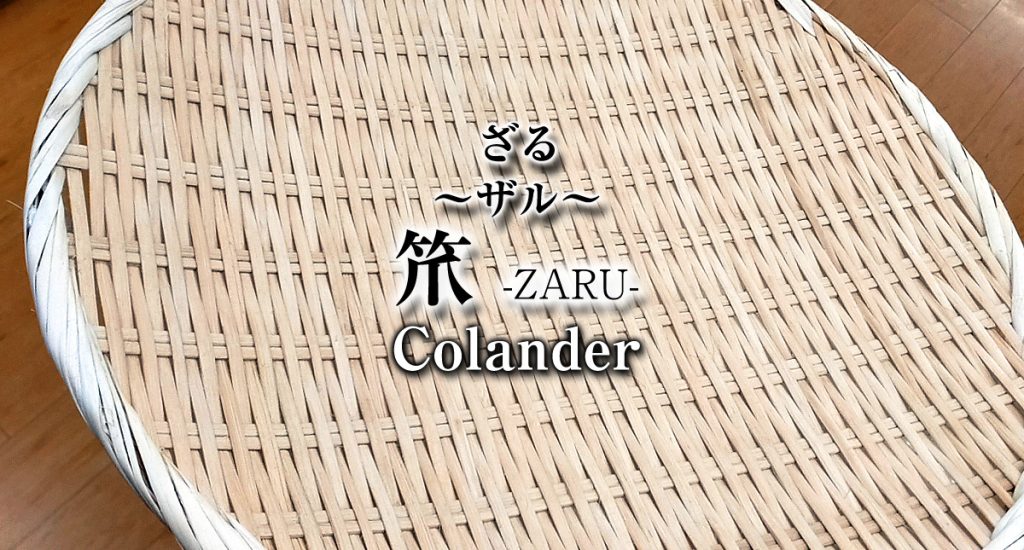
Zaru (Colander) – ザル : ざる (笊) –
A colander(zaru) is a thing.(;^ω^) However, it is deeply related to Japanese life and food, so we decided to cover it.
Baskets(zaru) have been used since ancient times, and are said to have been introduced to Japan as folk tools made from woven bamboo. To give you an idea of how long they have been used in Japan, lacquerware made from woven bamboo baskets and coated with lacquer has been excavated from the Korekawa ruins in Hachinohe City, Aomori Prefecture, Japan, which date back to the late Jomon period (approximately 4,400 to 3,200 years ago).
Two round bamboo baskets, one large and one small, have been excavated from the Tano Ruins (300 BC – 250 AD) in Amagasaki City, Hyogo Prefecture.
Zaru are also used in China as woven bamboo containers, and in Japan they have been woven from bamboo as folk tools since ancient times. However, the word zaru is also used to refer to a tool, something rough and with many holes (metaphorical meaning), and also in the names of foods such as zaru soba (bamboo soba), zaru udon (bamboo udon), and zaru ramen (bamboo Chinese).
The word ‘ざる’ is pronounced ‘zaru’ and refers to a circular container made from woven bamboo or plastic, or the contents of such a container, and its function is similar to that of a colander.
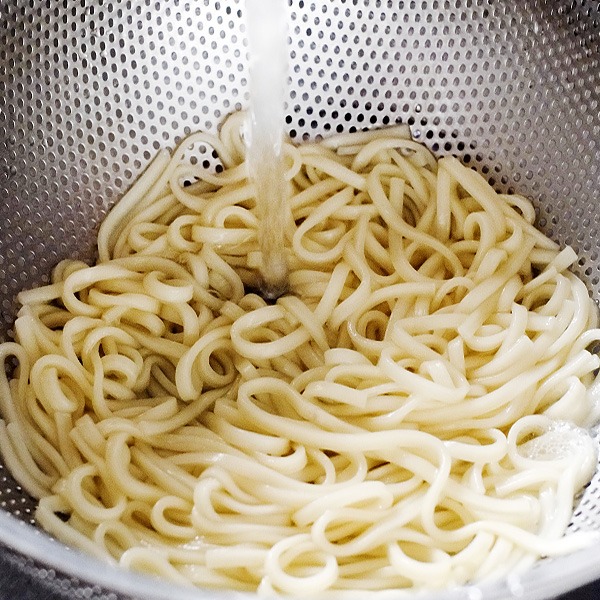
A colander is a bowl-shaped cookware with holes around the edge that is used for rinsing and draining water.
Use it to rinse vegetables and fruits, or to drain boiled pasta.
There are also designs that have a raised stand so that they can be left as is, or handles on both ends so that they can be hung over the sink.
Materials include stainless steel, enamel, and plastic.
The reason that bamboo has been used in Japan for a long time and is still in use today is probably because, before the invention of stainless steel, enamel, and plastic, it did not rust in the high temperatures and humidity, was readily available if it broke, and was easy to regenerate and process.
Usage Example
Dry(Hosu:ほす)
It is also used to make so-called “dried foods” by drying food in the sun or shade.
For example, it can be used to make pickled plums, or to dry thinly sliced vegetables (pumpkin, eggplant, ginger, shiitake mushrooms, etc.) to make “dried vegetables.” It can be put away quickly if it rains.
Plate the food (after draining the water)
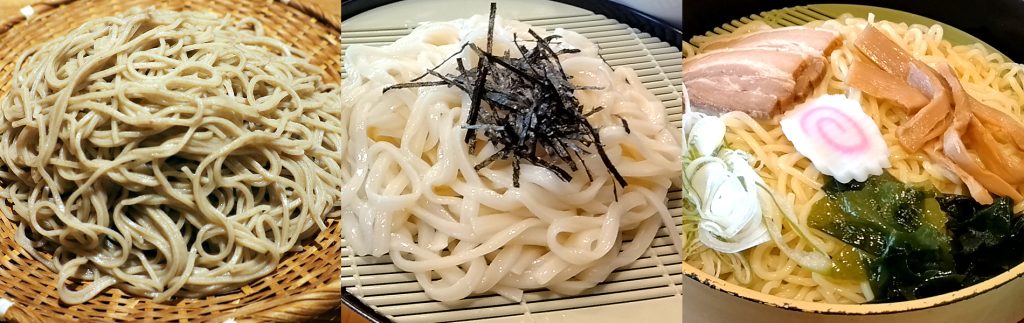
It can be used to serve soba or udon noodles to customers as “zaru soba,” “mori soba,” “zaru udon,” or “mori udon,” or it can be used to serve ramen noodles to customers as “zaru ramen,” “zaru chuka,” etc. After draining the water, it can be served as is on a plate.
Fishing gear
Apparently it was once commonly used as a fishing tool for catching river fish and loaches, and it can still be used today.
It is also used to separate desired items from sand, such as when clamming.
Farm tools
In addition, large sieves have been used for the traditional manual threshing of grains such as rice and buckwheat.
Collect and display items
They are also used in stores to display and sell products. One of the great things about baskets(Zaru) is that they can be displayed as is after washing.
Used as a metaphor or phrase
Since a sieve does not allow large objects to pass through but does allow liquids and small objects to pass through, something that is not tightly sealed is sometimes described as being “like a sieve(Zaru).”
*Accounting with lax checks is called “zaru accounting.”
*In competitive sports and games, it is used as a derogatory term for teams or players with poor defensive skills.
“Our team’s goalkeeping and defense are ‘Zaru’…”
It can also be used as a self-deprecating expression.
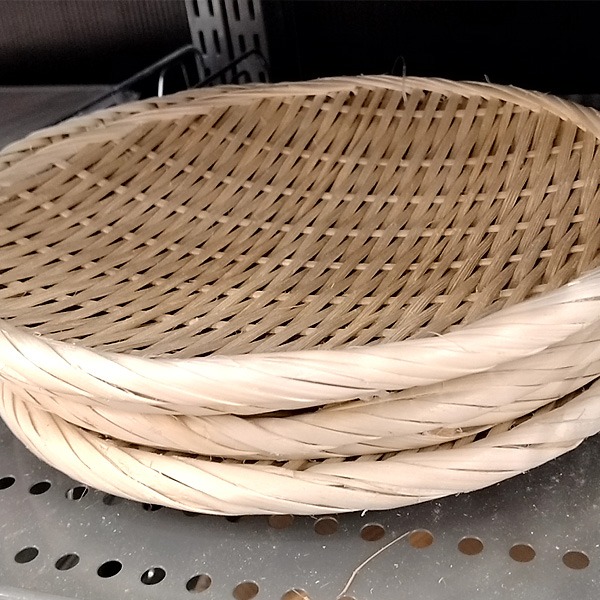
The reason I’m posting about bamboo baskets is because I like bamboo Zaru soba.(*’ω’*)
I also personally believe that sieves(Zaru), which are still commonly sold at home improvement stores, have played a key role in shaping Japanese culture.
Smaller sizes are sold at home improvement stores in Japan for under 1,000 yen.
If you wash a bamboo Zaru (bamboo product) after use, the best way to care for it is to thoroughly wipe off the moisture and allow it to dry completely.
I think the reason it has been used in Japan since ancient times is because Japan has a well-developed drying culture.
In Japan, it has always been assumed that the general public is a good person, and it has been taken for granted that people hang out their futons, hang out their laundry, and eat their meals, but I think this has changed a lot in recent years.
Women are careful about hanging out their underwear, and in the past, people would hang out their futons and beat them as hard as they could to remove the dust, but nowadays, fewer people are beating them loudly out of concern for their neighbors.
Japan has a culture of drying, but overall the sunny weather rate is around 60% throughout the year, with most areas experiencing sunny skies.
However, I think bamboo baskets were very useful because they could be put away quickly in the event of sudden rain, dried, and then sold as is.
People who live in humid countries or those with few sunny days should take care after using a bamboo colander, but it is very convenient because you can wash it with items inside and then drain the water and use it again.
Thank you for watching.