Oden
このサイトはアフィリエイト広告を利用しています。 This site uses affiliate advertising.

Oden – オデン (おでん) –
There are many things we crave during the cold winter months, but one that originated in Japan is “Oden.”(=゚ω゚)ノ。I love it!
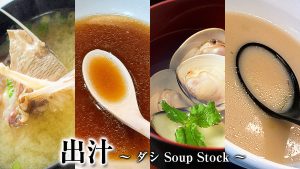
I’m not a gourmet, nor am I particularly particular about taste, so I don’t really know, but it’s a “Dashi” made by simmering ingredients such as boiled eggs, satsumaage, konnyaku, kelp, radish, and potatoes in a broth made from bonito flakes and kelp.
[Introduction of “Dashi”]
I don’t think there are many Japanese people who haven’t tried it at least once. I think it was even served in elementary school lunches in the latter half of the Showa era.
If I were to explain it to a foreigner who has never eaten it, I would say it is a dish of various ingredients simmered in udon or soba soup…For those who have never eaten udon or soba,(;^ω^)As I said before, it is a dish stewed in a broth made from bonito flakes and kelp…(The only thing I can say is that it’s salty but not too strong, sweet or salty. m(_ _)m Sorry, I can’t express it in words.)
“Oden” is another name for the tofu dish “Dengaku,” and since characters for this dish can be found as early as the 14th century, it is believed that the original form of the dish was in Japan.
From Hokkaido in the north to the Kanto region, Shizuoka Prefecture, Nagano Prefecture, Tokai region, Kinki region, Hokuriku region, Shikoku region, Kyushu region, and Okinawa Prefecture, the way of eating and the ingredients used have developed in each region, and it is impossible for me to try it all in my lifetime!
The stewed ingredients are eaten with different seasonings depending on the region and the person, such as wasabi, mustard, Japanese pepper, yuzu kosho, miso, or bonito flakes, but I like to eat it with yuzu kosho (the green paste-like thing on the far right of the image above).
The saltiness, slight spiciness and flavor of yuzu give it a refreshing taste (this is my personal opinion).
The ingredients used in “Oden” change with the times and our needs, so I’d like to introduce some more unusual ingredients than the standard ones. These are things you crave in the winter, and unless you make them yourself, they won’t be on store shelves outside of autumn, winter, or spring (packaged versions are sold at convenience stores in Japan), so I’d like to introduce them once the weather gets colder.
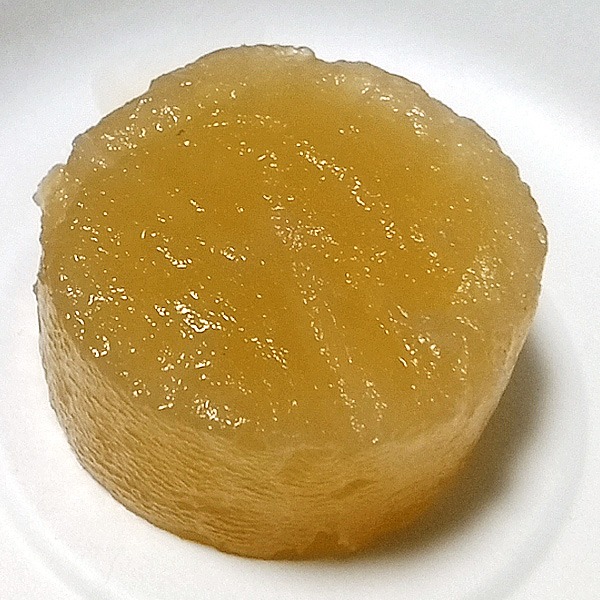
Radish ~ ダイコン(大根)~
In Japan, radish is truly soaked in dashi stock and is ranked No. 1 or No. 2 as an oden ingredient!
I cut it into 4-6 pieces and eat one piece after eating the other ingredients, then eat another piece after eating the other ingredients.(*’ω’*)
This i”Soup Stock” is well known overseas, but I think Japan is a vegetable powerhouse that can also be proud of its vegetables! I’m grateful to the farmers!
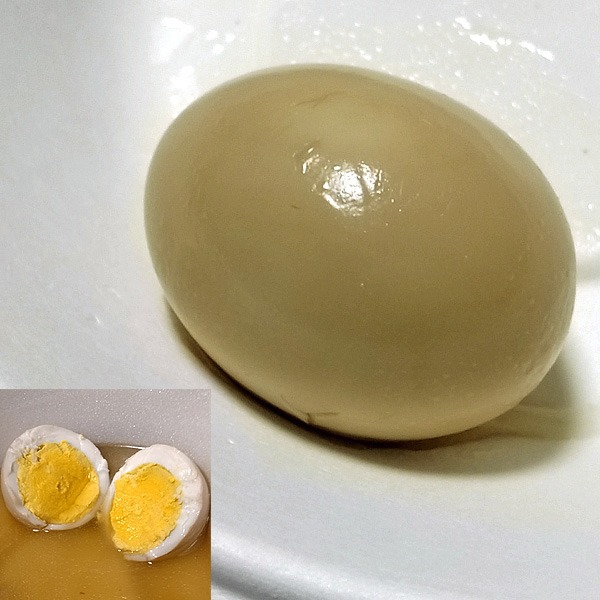
Boiled Eggs ~ ユデタマゴ(ゆで卵)~
Whenever I eat oden, I always eat an egg, so I think I like it the most! Sometimes I eat two.(^ω^)
When making oden, it is said that adding the ingredients to the pot early on allows the broth to soak in better.
I usually eat it in two batches, letting the yolk soak in the dashi stock towards the end of the meal.
日We are grateful to the egg-laying chicken farms for providing us with eggs that can be eaten raw, baked, or boiled!

Mochi Wrapped In A Tofu Pouch ~ モチキンチャク(餅巾着)~
Whenever I eat oden, I always eat an egg, but if available, I always eat mochi-kinchaku as well.(‘ω’)ノ
It seems that awareness of mochi is spreading overseas, but I think that the “mochi pouch” in oden is an ingredient that is hard to find overseas.
The harmony of deep-fried tofu that has absorbed the broth and soft mochi(;^ω^)
Another reason I eat mochi-kinchaku is because it fills me up.
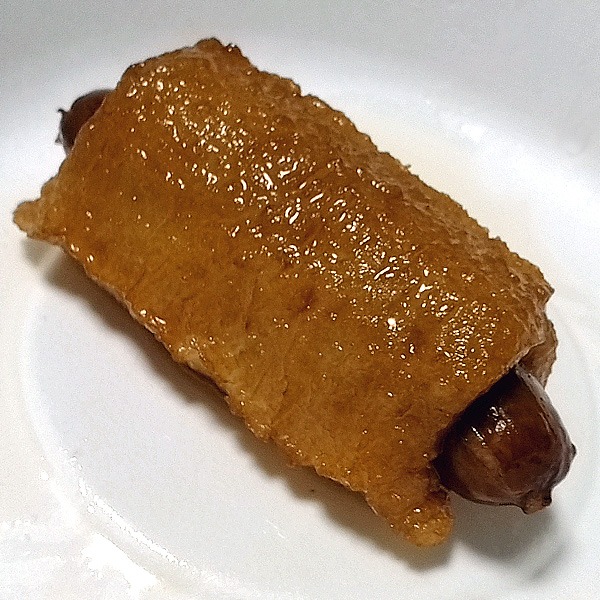
Wiener Roll ~ ウインナーマキ(ウインナー巻)~
This popular, filling fried dish is made of crispy sausages wrapped in fish paste.
Truly devilishly delicious( *´艸`)
I don’t think it was around when I was a child, but now I find myself eating it together with mochi-kinchaku!
It’s a nice combination of the saltiness of the soup stock and the saltiness of the sausages.
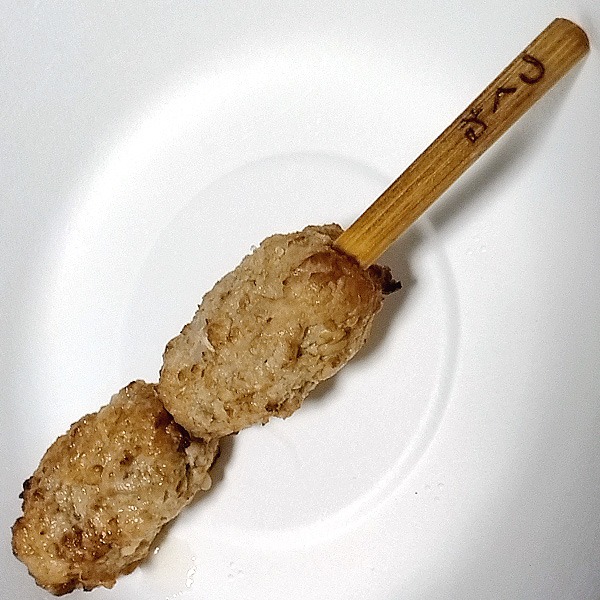
Chicken Meatball ~ トリツクネクシ(鶏つくね串)~
Yakitori seems to be gaining recognition overseas, and this dish features tsukune, a type of yakitori, soaked in broth, giving it an exquisite flavor.
It’s delicious grilled, but when it soaks up the broth it becomes even more flavorful.
However, opinions seem to be divided on whether one prefers grilled or not, but I like both, so I eat them when I can!(‘ω’)
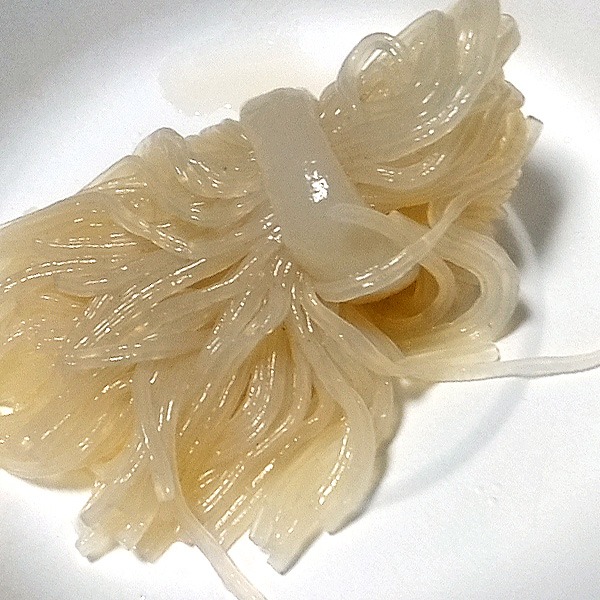
Fine, Whitish Strings Of Konnyaku ~ シラタキ(白滝)~
こちらThose who don’t know what shirataki is will tell you that it’s simply konnyaku like noodles.(;´・ω・)
This may not be for everyone, but I like to take it apart and eat it like ramen.
Since it’s konnyaku, I try to eat it as I think it’s good for stomach function.
If someone who doesn’t know about it sees it, they’ll probably think it’s a squid.(;^ω^)
There are still many more delicious ingredients to choose from, so I will introduce them gradually. Thank you for watching.