Donburi – Rice bowl –
このサイトはアフィリエイト広告を利用しています。 This site uses affiliate advertising.
Donburi (Rice bowl) – ドンブリ : どんぶり (丼) –
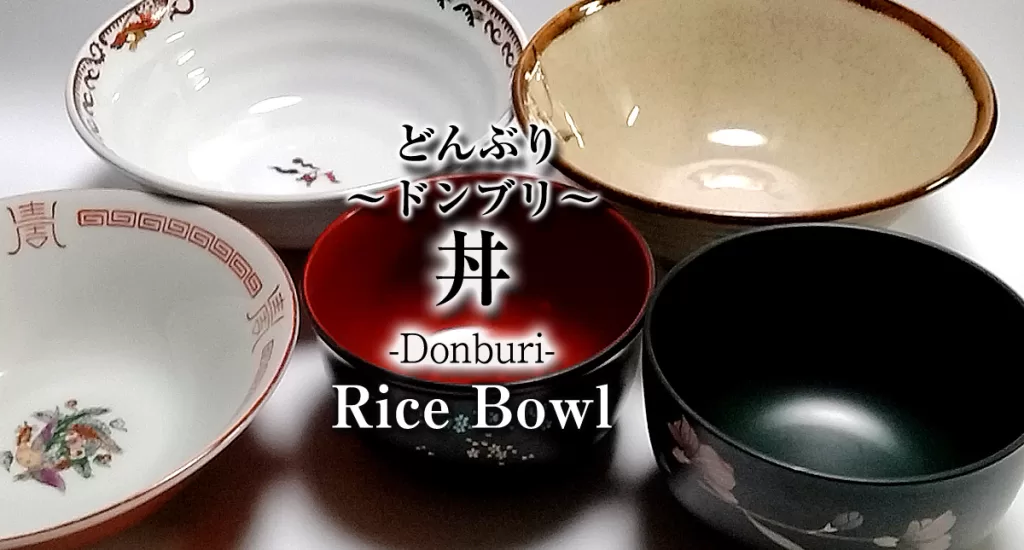
A bowl (丼=donburi) is a container.(*´Д`)
It seems that NHK’s Broadcasting Terminology Committee approved the adoption of the character “donburi「丼」” in two ways: “donburi” and “don.”
“Donburi” refers to a thick, deep ceramic bowl, and is a type of tableware used for a variety of cuisines, including rice bowl dishes, noodles, and rice dishes.
The word apparently originated from the fact that in the Edo period, large cloth bags or storage bags attached to the front of a craftsman’s belly wrap were called “donburi.” However, they are not only made of ceramic, but also out of wood, porcelain, plastic, metal, lacquerware, melamine and other materials, and it seems that people use them based on their purpose and ease of handling.
In Japan, it is generally considered acceptable to hold small dishes or bowls(donburi「丼」) while eating.
However, when lifting it, be careful that the temperature is not too low so that you will not get burned, and that the weight is something you can hold in one hand.
There is a wide variety of shapes, materials, and sizes.
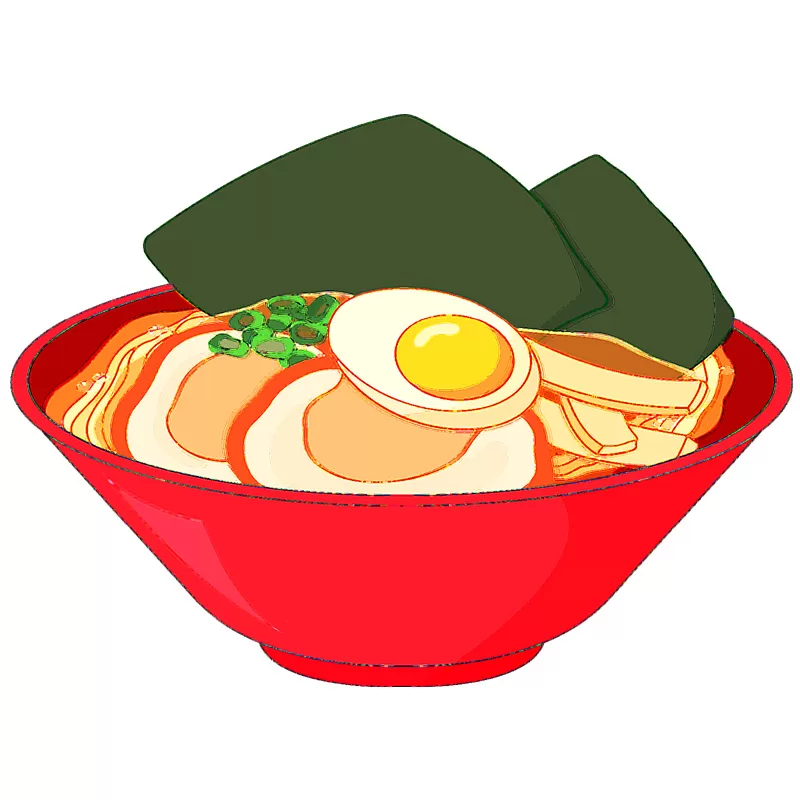
Ramen bowls have a sharp shape with a straight diagonal cut from a high base, are low in height and easy to hold with one hand, can be easily stacked for easy storage, and do not require a large amount of soup, making them ideal for ramen.。
The texture of the noodles is maintained for a long time, allowing you to enjoy the hot soup until the very last drop, and the wide rim of the bowl makes it easy to remove the noodles from the soup and to mix the noodles together inside the bowl.
Ramen introduction article
Zaru(Colander)
However, as I mentioned earlier, in Japan, names of objects are often used as names for food.
Here are some foods that have the word “donburi「丼」” in their names.
*Prices may change depending on when you order. Please check the website or store.
Beef bowl(牛丼 ぎゅうどん)
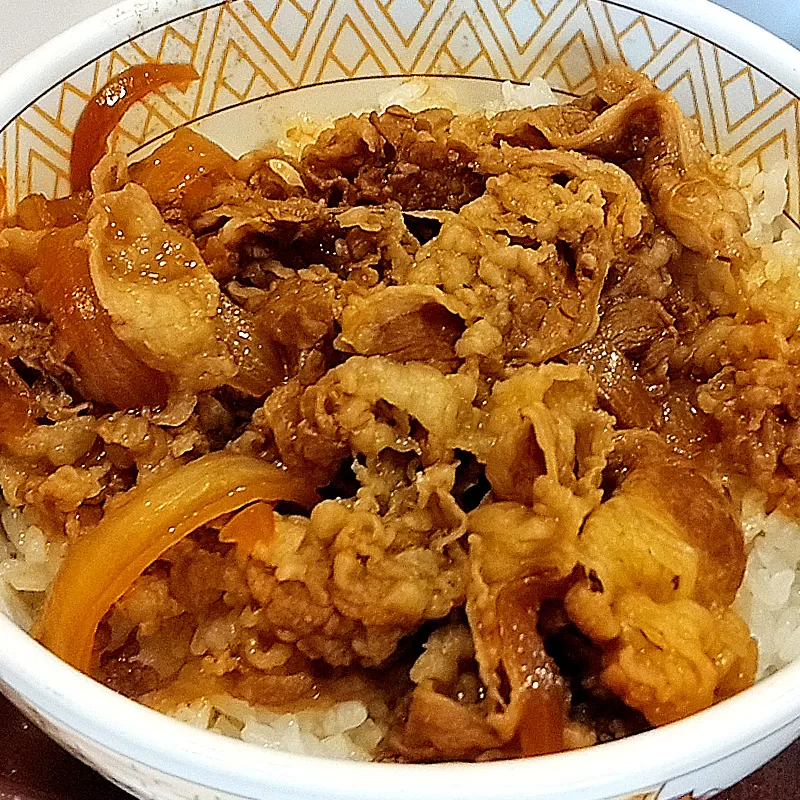
2025年5月、すき家-店内:並盛¥480(税込)
When you think of Japanese rice bowls, the first thing that comes to mind is gyudon!
(=゚ω゚)ノ
The top three beef bowl chains in Japan in terms of sales in 2024 will be Sukiya, Yoshinoya, and Matsuya, in that order.
It is a Japanese dish made by simmering beef, onions, ginger, etc. in a sweet and spicy sauce with sugar, soy sauce, sake, and mirin, and serving it on top of rice; it is also called gyumeshi .
Gyudon is said to have originated as a dish of beef stew served on rice around the time Yoshinoya was founded in the Meiji era.
I am grateful to Japanese companies that this meal will still be available for about 500 yen (tax included) in May 2025.
Oyakodon(親子丼 おやこどん)
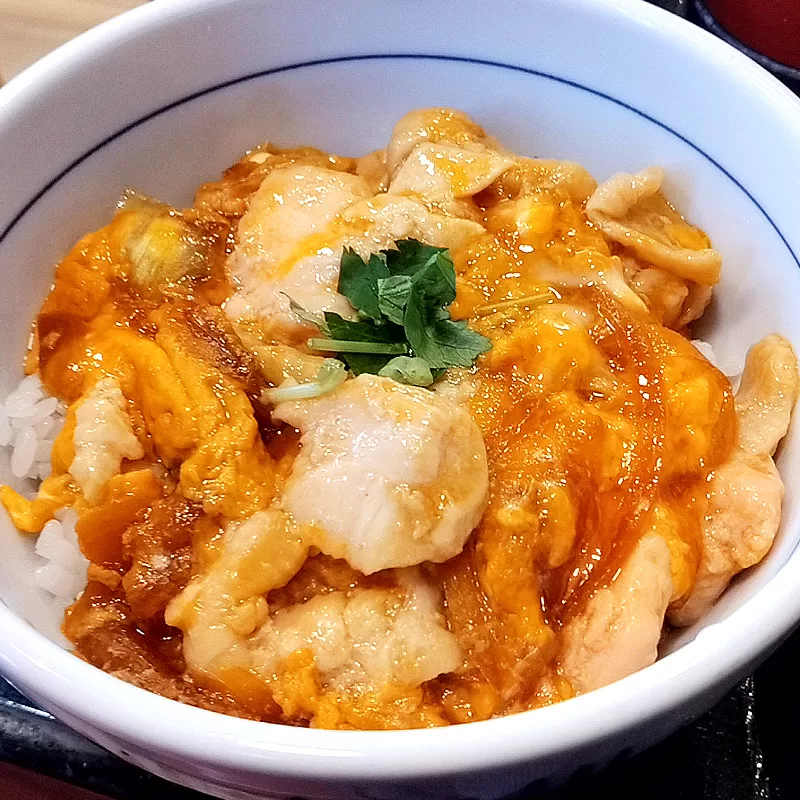
2025年5月、なか卯-店内:並盛¥480(税込)
Oyakodon is a rice bowl dish made by boiling chicken (parent) and egg (child) and then binding the ingredients with egg and placing them on top of white rice.
It is called “Oyakodon” because it uses chicken and eggs.(@_@;)
The ingredients are chicken, eggs, onions, green onions, dashi stock, soy sauce, mirin, sugar, etc., and the reason it feels lighter on the stomach than beef bowl is probably because it uses chicken.
When I researched oyakodon recently, I learned that its origins are unknown.The oldest document that can be confirmed is a newspaper advertisement placed by “Edoyuki” in Motomachi, Kobe in 1884 (Meiji 17), where the names “Oyako Jo-don,” “Oyako Nami-don,” and “Oyako Chu-don” appear.
I suddenly have a craving.( *´艸`)
Pork Cutlet Bowl(かつ丼 カツどん)
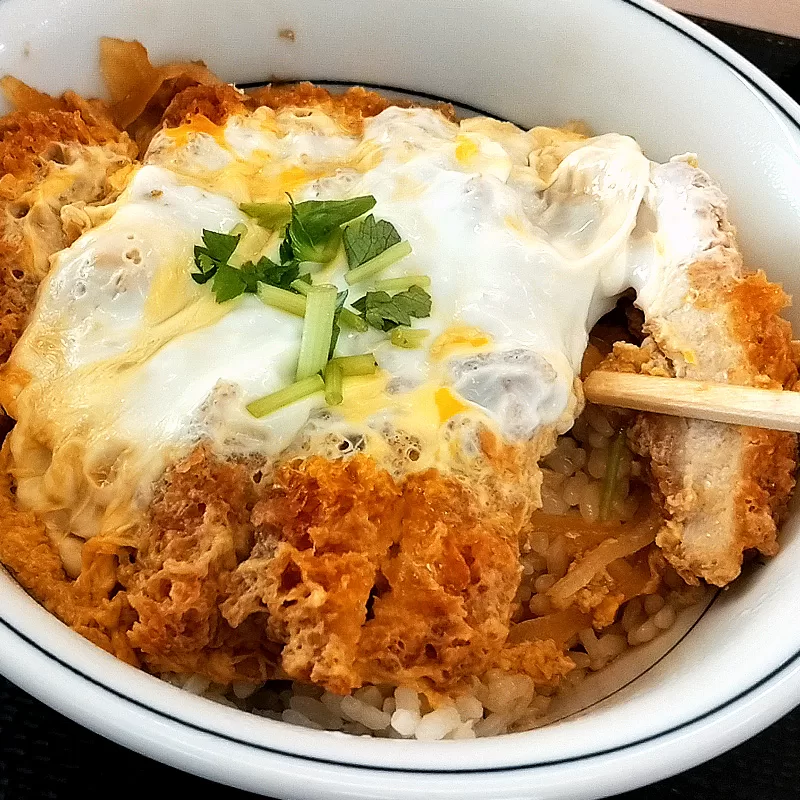
2025年5月、かつや-店内:かつ丼(梅)¥649(税込)
Katsudon is a dish of pork cutlet (fried pork) bound with egg and served on top of white rice. The sweet and spicy broth soaks into the rice, making it a filling meal.
It’s very filling and satisfying, making it a true heavyweight bowl dish.(`・ω・´)
As for the origin of katsudon, it is said that in the late 1890s, katsudon was served at Okumura Honten, a long-established soba restaurant in Kofu, Yamanashi Prefecture, and based on the information currently available, the Kofu theory is considered to be the oldest.
I’m sorry to those who can’t eat pork for religious reasons or for physical reasons, but I love it.
Tendon(天丼 てんどん)
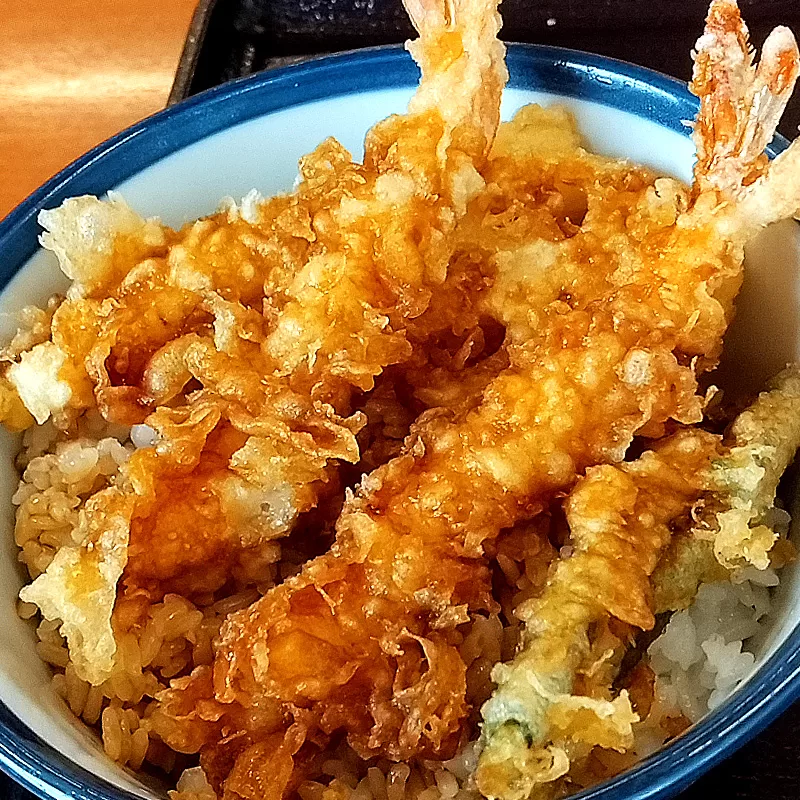
2025年5月、てんや-店内:海老といかの上天丼¥770(税込)
Tendon is an abbreviation of “tempura donburi” and is a bowl dish of tempura placed on rice and topped with sauce.
There are several theories about the birth of tendon, including one that says it originated from a soba noodle stand (established in 1831) that was the predecessor of “Hashizen” in Shinbashi, and another that says it was preceded by the oldest surviving tempura restaurant in Asakusa Kaminarimon (established in 1837).
Japan is famous for seafood as well as meat, but I also like vegetables, and my favorite tempura ingredients include sweet potato, eggplant, carrot, lotus root, okra, shiitake mushrooms, and maitake mushrooms.
The tendon in the picture is “Premium Shrimp and Squid Tendon.(海老といかの上天丼)”
2 shrimp, squid, lotus root, and green beans(いんげん).
Seafood Bowl(海鮮丼 かいせんどん)

2025年5月、魚鮮水産-店内:海鮮丼定食(みそ汁、小鉢、漬物付き)¥1300(税込)
Kaisendon is a Japanese dish consisting of a bowl of rice (white rice or vinegared rice) topped with fresh seafood such as tuna and salmon roe served as sashimi. It is said to have originated in Hokkaido after the war (around 1945) and has since spread to other areas.
Various types of seafood are used as ingredients, such as tuna, salmon roe, salmon, sea urchin, scallops, shrimp, shellfish, and seaweed.
White rice is common, but it is also often eaten with vinegared rice.I like to dissolve wasabi in soy sauce and pour it over the whole thing.(‘ω’)
The seafood bowl in the picture was served at Gyosen Suisan(魚鮮水産) for lunch.This is a wonderful culture of processing, logistics, and cooking that Japan can be proud of, and it can be enjoyed even in landlocked Saitama Prefecture!
Chinese Rice Bowl(中華丼(ちゅうかどん))
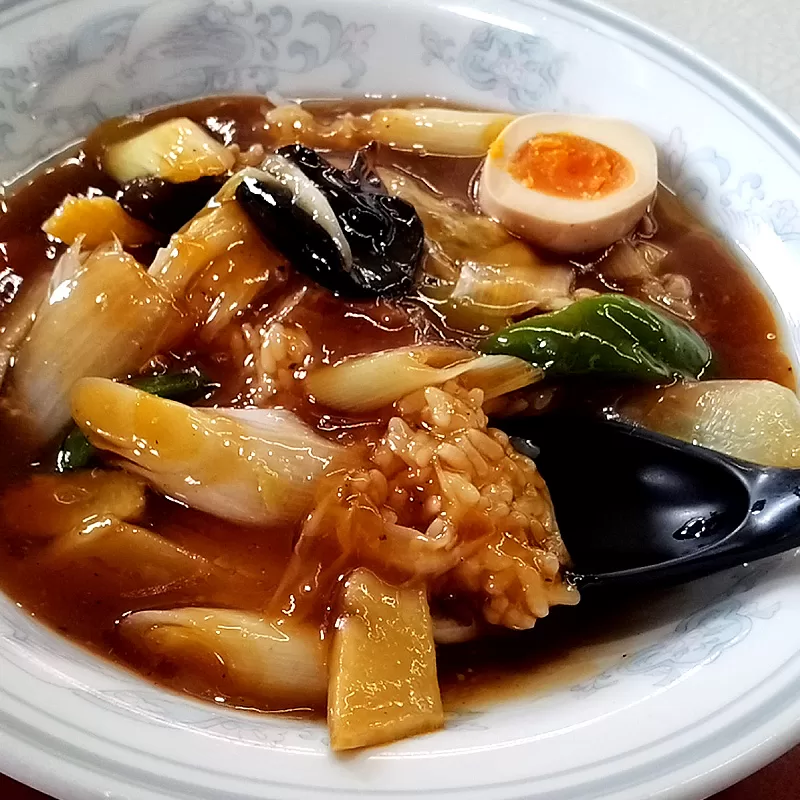
2025年5月、玉も亭-店内:中華丼(小鉢、スープ付き)¥830(税込)
〒339-0025 埼玉県さいたま市岩槻区釣上新田1109−1
1109-1 Tsuriageshinden, Iwatsuki-ku, Saitama City, Saitama Prefecture, 339-0025
玉も亭[Google Map ]
Chukadon (Chinese rice bowl) is a Japanese-style Chinese dish consisting of eight treasures served(八宝菜=はっぽうさい) on top of white rice.
It is a rice bowl topped with a thick sauce made with stir-fried meat and vegetables, but the ingredients and seasoning vary depending on the restaurant or household, and it is also called “eight treasure rice” because it resembles eight treasures.
A variety of meats and vegetables are used as ingredients, such as pork, chicken, squid, shrimp, bamboo shoots, shiitake mushrooms, and Chinese cabbage, but in Japan, quail eggs and boiled eggs are also used.
It seems that in China, many people have eaten Eight Treasures over rice since ancient times, but it was not considered very elegant, and it is believed that the Chinese rice bowl dish originated in Japan.
There is a theory that the name “Chukadon中華丼(ちゅうかどん)” (Chinese rice bowl) was also created by Asakusa Rairaiken.
Tendon originated in Japan as fast food, and because of Japan’s rice culture, I think that’s how the idea came about.
There is still much more to introduce, but we will introduce them gradually, so please be patient.
Returning to our original discussion, a bowl is a container.(‘ω’)
If you’re interested, there are plenty of Japanese-made products on Amazon, so be sure to find one that suits you.
Used as a metaphor or phrase
The word “donburi” comes from the fact that in the past, craftsmen and others would casually put money in and take it out of the bowls they wore around their waists, hence the term “donburi kanjo「丼勘定(ドンブリカンジョウ)」” (bowl counting). (To withdraw and deposit money roughly without making detailed calculations.)
Thank you for watching.