
Yakitori (Grilled Chicken)
このサイトはアフィリエイト広告を利用しています。 This site uses affiliate advertising.
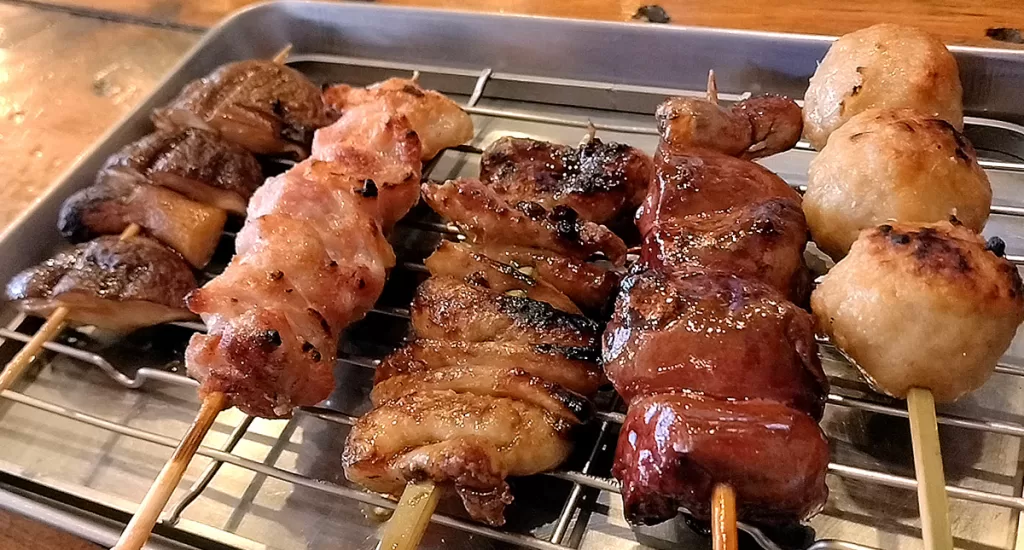
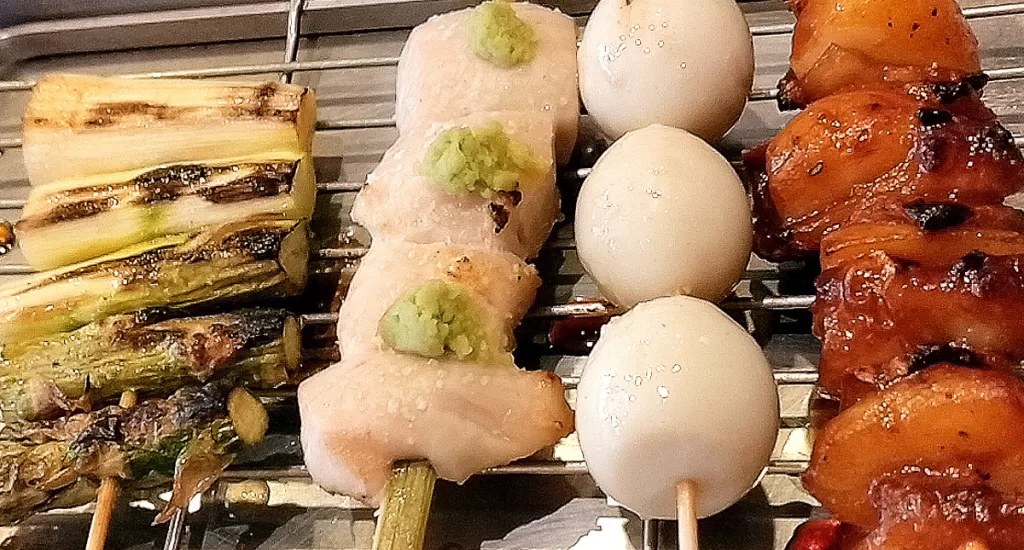
2025年5月:やきとり にしだ場(右から、つくね・レバー・皮・もも・椎茸)
Yakitori (Grilled Chicken) – やきとり : ヤキトリ (焼き鳥) –
Yakitori(焼き鳥(やきとり)) generally refers to chicken that is skewered and grilled.
Meat and offal other than chicken that are grilled on a skewer can also be called “yakitori.(やきとり)”
The difference between “「焼き鳥」yakitori” (written in kanji) and “yakitori” (written in hiragana) is,
「焼き鳥」”Yakitori”=It refers to chicken meat that is skewered and grilled.-「焼き鳥 〇〇」Stores that state this are likely to specialize in chicken.
「やきとり」”Yakitori”=It apparently refers to meat other than chicken (pork, beef, etc.) or offal (motsu) that is skewered and grilled.
-「やきとり 〇〇」Stores that state this are likely to sell a variety of meats and offal other than chicken.
In the past, whole roasted birds such as thrushes and sparrows were called “yakitori.”
(※Basically, I can eat anything as long as it’s cooked, but I do have some reservations about eating it in its raw form.However, if there’s nothing else to eat, I have no problem eating it.
(;^ω^)I think this varies quite a bit even among Japanese people.)
The cooking method of skewering chicken appeared during the Edo period (around 1603-1868) and continues to this day.
During the Meiji period (1868-1912), in addition to chicken, skewered meat such as pork and beef innards also became popular as “yakitori.”
Nowadays, in addition to chicken, yakitori(やきとり) can also be made using pork, beef, horse meat, vegetables, and processed foods, all grilled on skewers.
In particular, pork yakitori (grilled chicken with miso sauce) is apparently famous in Higashimatsuyama City (Saitama Prefecture), so I’ll let you know when I go and try it.
There are many different types of yakitori skewers to suit the ingredients, and they vary depending on the store, so we’ve included the store name in the banner at the top.(It’s true that the skewers are different depending on the ingredients.)
[やきとり にしだ場]
https://nishidaba.jp/
There are mainly round skewers(丸串), square skewers(角串), flat skewers(平串), gun skewers(鉄砲串), pine needle skewers(松葉串), ginkgo skewers(ぎんなん串), etc., and each has different characteristics.
Common types of skewers(串=Kushi)
丸串(Round skewer):It has a standard round cross-section and is used for a wide range of ingredients, including chicken and vegetables.角串(square skewer):The cross section is square, making them more stable than round skewers and suitable for large ingredients and meatballs.
平串(lat skewer):It has a flat cross section and is wide, making it ideal for stabbing meatballs and thick slices of meat.
鉄砲串(Gun skewers):It has a flat handle that is designed to make it easy to grab even large ingredients.
松葉串(Pine needle skewers):A thin skewer with a forked tip, suitable for small ingredients or ingredients that tend to fall apart (such as shrimp).
ぎんなん串(Ginkgo skewers):These skewers are thinner than round skewers and are suitable for piercing small or delicate ingredients.
In addition, there are skewers that are used depending on the part of the fish and the ingredients.(*_*;
魚串(fish skewers):Used to thread seafood onto skewers.
さば串(Mackerel skewers):It is used to skewer seafood such as mackerel.
いか串(Squid skewers):Used to thread squid onto skewers.
つくね串(Meatball skewers):Used to thread meatballs onto skewers.
田楽串(Dengaku skewers):Dengaku skewers are suitable for piercing round ingredients (such as tofu).
If you are baking or making it at home, I think it’s best to use what suits you best.
If the skewers don’t get cooked, you can wash them and reuse them, and you can easily buy them on Amazon.
Yakitori is seasoned with salt or sauce, and preferences vary depending on the region, but some restaurants offer just sauce, or a choice between sauce or salt.
The salt has a simple taste that allows you to enjoy the natural flavor of the chicken, while the sauce has a sweet, spicy and savory flavor, but I like both, so I’m fine with just salt depending on my mood.
When you order “yakitori” at a yakitori restaurant, chicken thigh meat is generally the most common, and I also assume that I will be getting thigh meat.
And what I’m curious about is the ingredients!
While it varies depending on the region and restaurant, here are some common ingredients found in the Kanto region.
※Prices may change depending on when you order. Please check the website or the store.
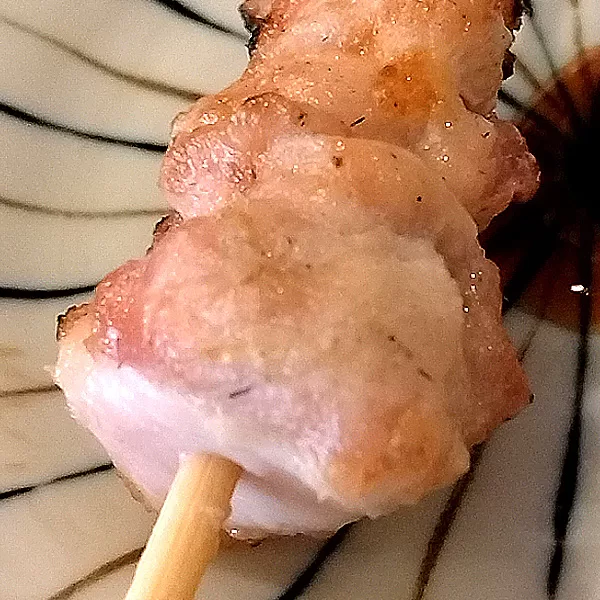
Momo:もも(The part from the base of the leg to the tip)
This is the standard thigh meat that comes when you order yakitori at a yakitori restaurant.
When it comes to yakitori donburi, I think this meat is the most popular.
The picture shows it with just salt for a simple taste, but you can also add soy sauce to taste.
Of course, it’s also delicious with sauce.
It’s such a classic Japanese soul food that it’s even sold behind the counters at convenience stores like Family Mart.
Reference price per bottle:¥100~200
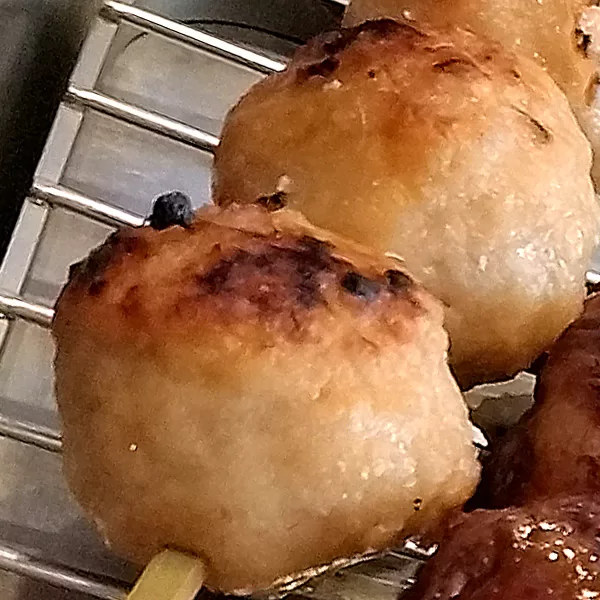
Tsukune(Meatballs):つくね(Breast meat, thigh meat, etc.)
Tsukune is generally made by kneading ground chicken (breast, thigh, etc.) with a binder such as egg, forming it into a ball or rod shape, and then cooking it.
It is not just chicken, but fish and vegetables can also be mixed in. It varies depending on the restaurant, and it is also delicious when added to oden.
[Introduction to Oden]
The image is simply salt.
Reference price per bottle:¥100~200
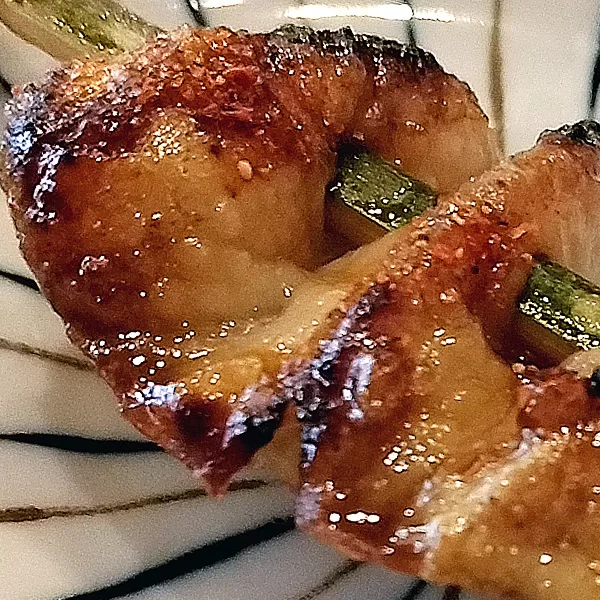
chicken skin:Tori ka wa とりかわ(Neck Skin)
When it comes to chicken, “torikawa” mainly refers to the skin around the neck.
I didn’t know(;^ω^)
The skin from the neck is thicker than the skin from other parts of the body and has very little meat attached to it, so it is often used in dishes such as yakitori.
Depending on the restaurant, they cook it until it is crispy or not, and people either like it or dislike the texture, but I like to eat it with shichimi pepper.
Reference price per bottle:¥130~240

lever:レバー(lever)
In yakitori restaurants, “liver” refers to chicken liver, but some restaurants use pork instead. If it says “chicken = chicken liver,” it means chicken is used.
It’s one of the classic yakitori dishes, and is popular for its unique richness and soft texture, but there are also many people who don’t like it.
It is rich in vitamin A, B vitamins, iron, and more, and has a rich flavor and unique taste and texture. I like it both raw and fully cooked.
Reference price per bottle:¥150~280
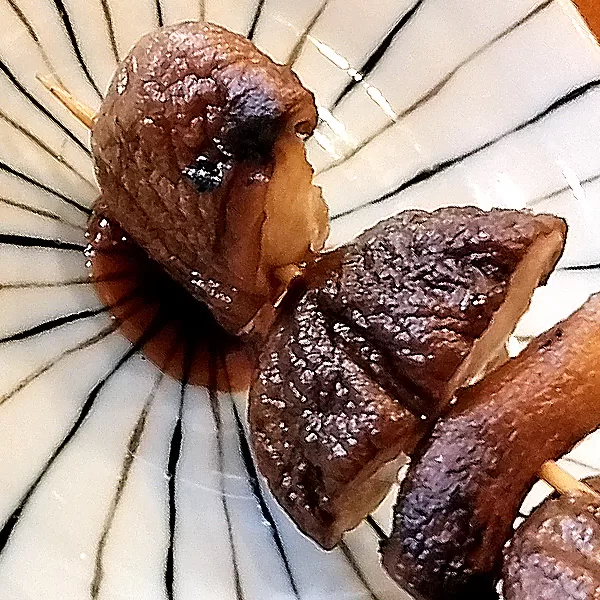
Shiitake mushrooms:椎茸(しいたけ)
Technically, it is a mushroom and not a vegetable, but it is one of my absolute favorite ingredients!
Shiitake mushrooms are rich in nutrients such as vitamin D, folic acid, dietary fiber, and eritadenine, making them a food that is useful for maintaining health. Vitamin D in particular is said to be effective in preventing osteoporosis, while dietary fiber is said to be effective in preventing constipation and high blood pressure.
You can brown it in a frying pan at home and it’s delicious with just soy sauce or salt, and it can also be used in miso soup and other soups, making it a food that Japan is proud of!
There are some people who just don’t like it very much.(;´Д`)
Reference price per bottle:¥150~280
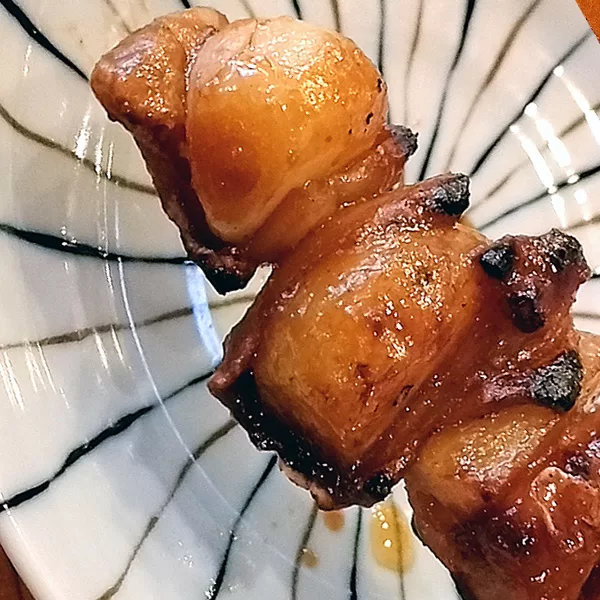
Chicken Skin Garlic:皮にんにく(chicken skin+Garlic)
While skewers with just garlic are the norm, these are grilled chicken skin and garlic.
Many Japanese people avoid eating garlic when dining out because of its strong smell, but I have no hesitation in eating it!
Because it’s delicious!
I don’t have many opportunities to eat it at home, so I eat it when I can!щ(゚Д゚щ)
Reference price per bottle:¥150~280

Asparagus:アスパラガス
In Japan, the vegetables are as delicious as the mushrooms.
If you scrape off the surface of the stem near the root, it will taste delicious just grilled.
Of course it’s delicious boiled, but it’s also delicious grilled and with sauce, soy sauce, or just salt.
Bacon-wrapped asparagus is also commonly served in restaurants and at home.
It’s also delicious stir-fried in a frying pan with just butter and soy sauce.
Reference price per bottle:¥150~280
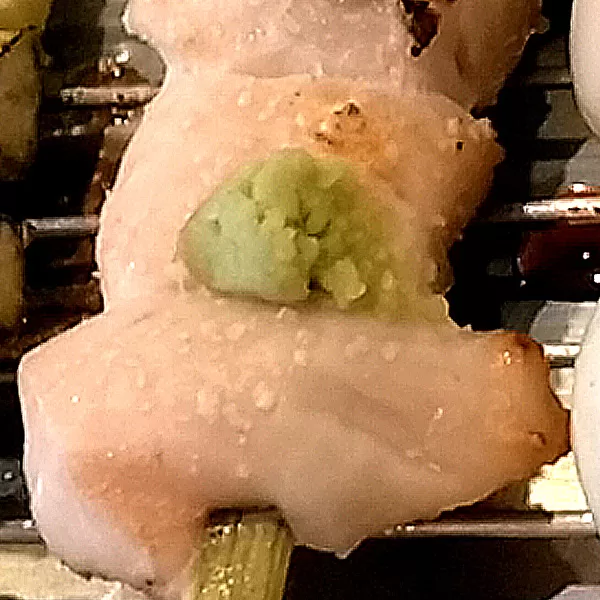
Chicken breast + wasabi: 鶏ささみ+山葵(Chicken pectoral muscle + wasabi)
Sashimi is chicken tenderloin that is skewered and grilled, and sashimi and wasabi are commonly seen at yakitori restaurants.
I don’t understand why grilling chicken breast and eating it with wasabi is so delicious.(;´・ω・)
“Chicken breast with wasabi” is delicious with a little soy sauce, but it’s also delicious just as is.
It will be even more delicious if you add grated fresh wasabi.
Reference price per bottle:¥150~300
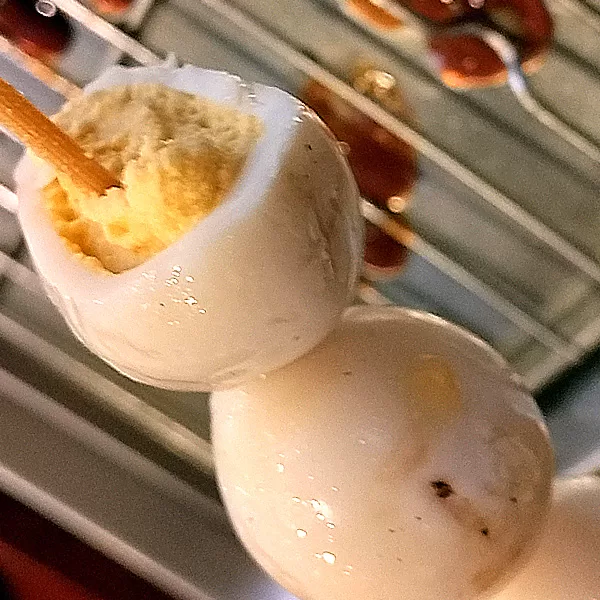
Quail eggs(うずらのたまご)
Quail eggs are commonly found in Japanese cuisine.
It is often included in Chinese rice bowls,
[Introduction of Chinese rice bowl]
I often see it at yakitori restaurants too.
It’s delicious with sauce, soy sauce, or just salt, and it can also be eaten raw in soup such as a strained soba noodle dish, making it a very versatile food.
The usual procedure is to peel the boiled eggs, skewer them and grill them, but apparently there are some restaurants that serve raw eggs with the shell on, skewered and grilled, so I would like to try that some day.
Reference price per bottle:¥100~280
In addition to the ingredients introduced here, there are still many other delicious ingredients and options available.
Cheese bacon, which is cheese wrapped in bacon, is delicious, as is grilled eggplant, a dish that Japan is proud of, and there is also the classic Negima, which I forgot to introduce this time.
I think it’s great to enjoy grilling your favorite things together outdoors or at a barbecue.
Gas cylinders are likely available outside of Japan, but please be aware that Japanese appliances have different voltages and socket shapes.※Introduction of the outlet [Standard Japanese outlet]
Drinking beer while eating yakitori is the best.
There is still a lot more to introduce about yakitori, but I will update this blog at a leisurely pace, so I hope you will stay tuned.
Thank you for watching.