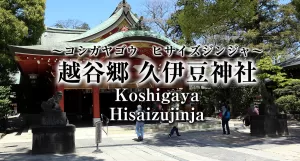
Washinomiya Shrine : Kuki City, Saitama Prefecture
このサイトはアフィリエイト広告を利用しています。 This site uses affiliate advertising.
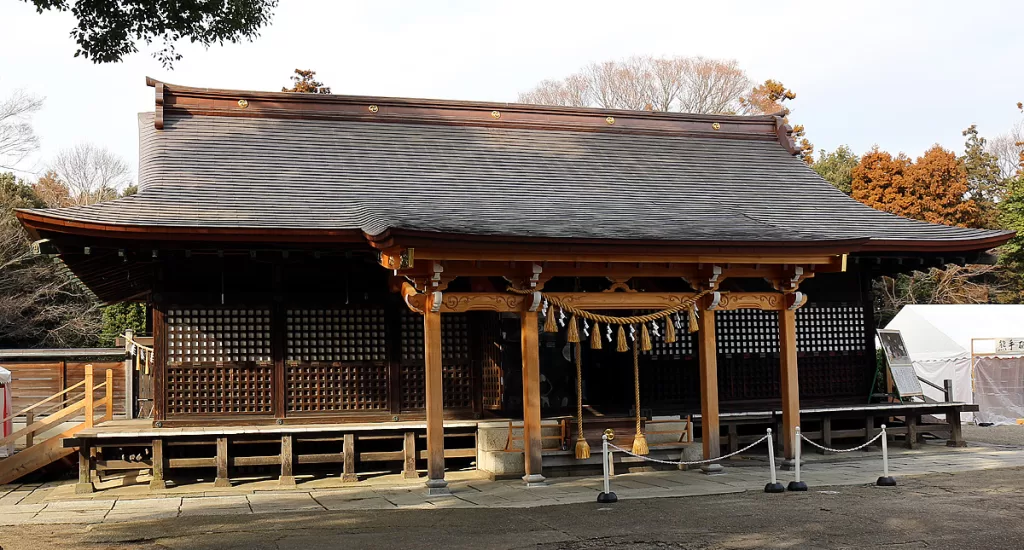
2025年4月下旬 撮影
Washinomiya Shrine : Kuki City, Saitama Prefecture – ワシノミヤジンジャ(埼玉県久喜市:鷲宮神社) –
Address: 1-6-1 Washimiya, Kuki City, Saitama Prefecture, 340-0217
[By train]
Tobu Isesaki Line: Approximately 8 minutes walk from Washinomiya Station
JR Utsunomiya Line: Get off at Higashiwashinomiya Station and take the bus* or taxi for about 10 minutes
*Asahi Bus: Higashiwashinomiya Station West Exit – Kasukabeguchi Loop Line, get off at “Washinomiya Shrine Entrance”
[By car]
Tohoku Expressway: Approx. 15 minutes from Kuki Interchange
Tohoku Expressway: Approximately 15 minutes from Kazo Interchange
【parking】
Approximately 60 parking spaces available
【toilet】 Usually until 4:30 p.m.
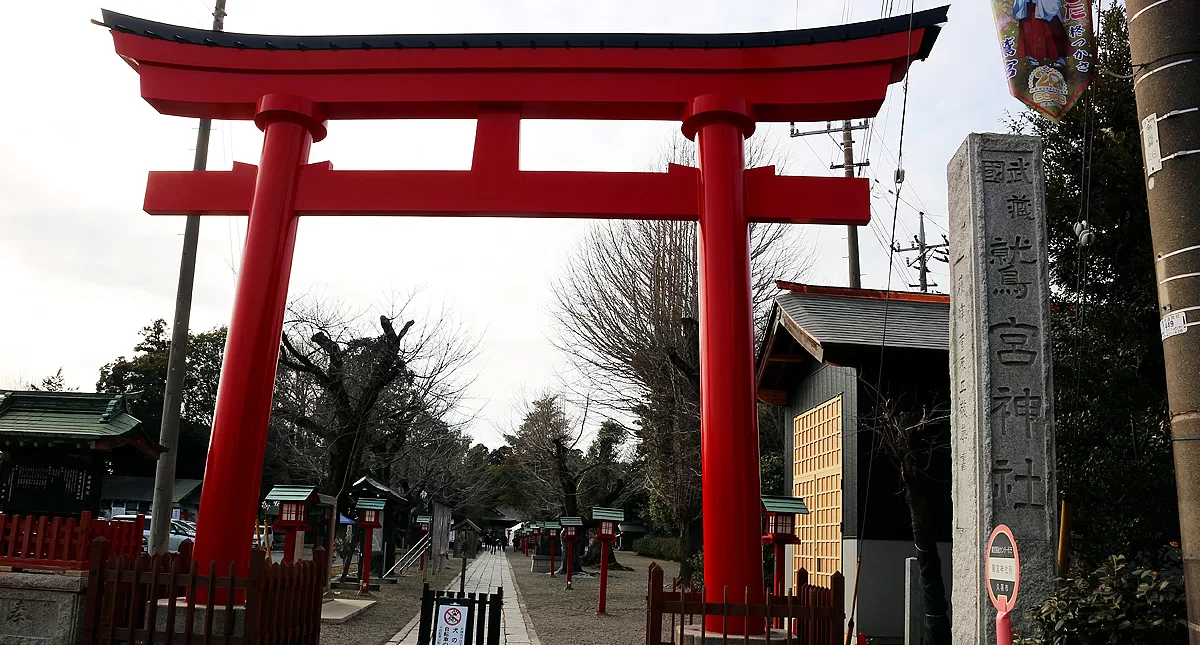
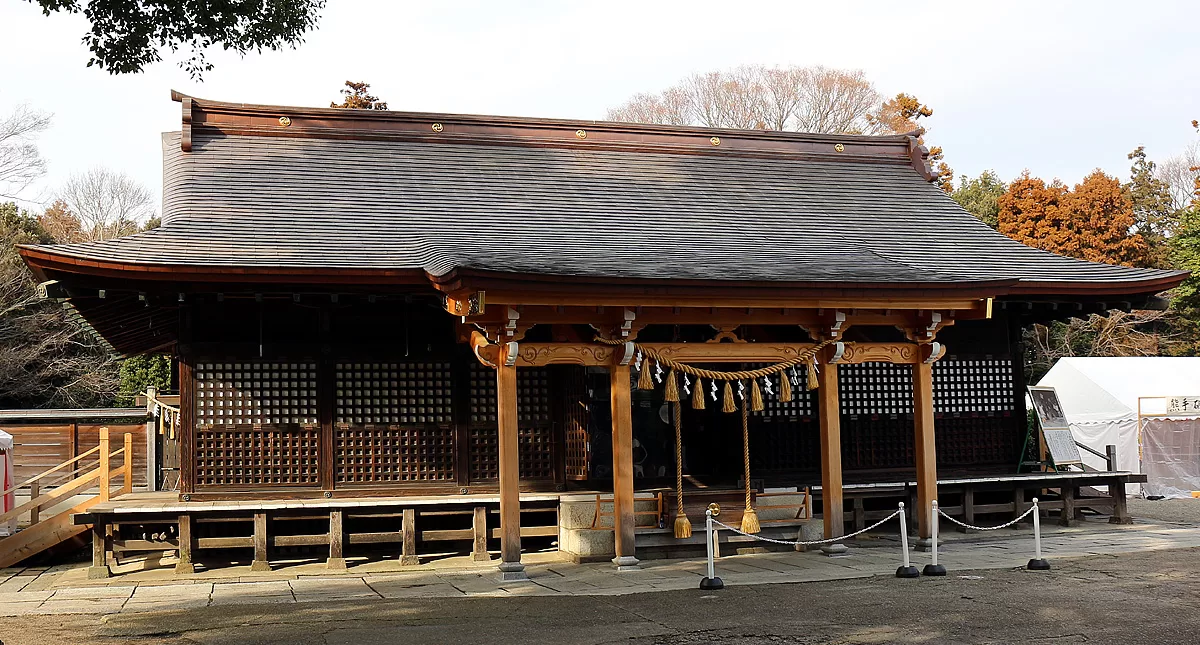
Washinomiya Shrine(わしのみやじんじゃ),This shrine is located in Washinomiya 1-chome, Kuki City, Saitama Prefecture, and is marked by a large, vermilion Torishaigai gate.
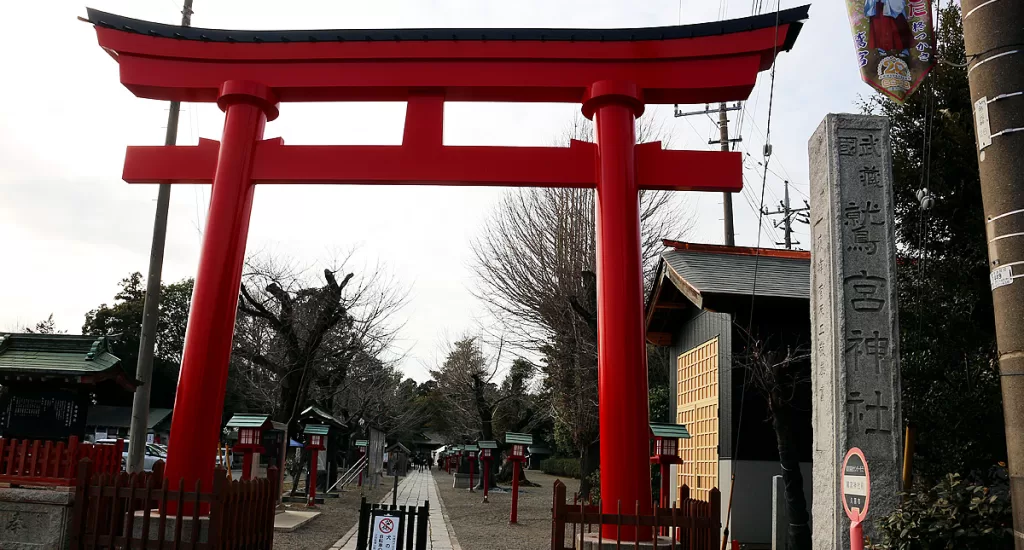
「The oldest shrine in the Kanto region(関東最古の大社)」、「The Head Office of the Bird(お酉様の本社)」It is said that the shrine enshrines Amenohohi no Mikoto, his son Takemoto no Mikoto, and Okuninushi no Mikoto, and is sometimes called Musashi-no-kuni Washinomiya Shrine(武蔵国鷲宮神社), after the name of the province.
According to the shrine’s legend, it is said to be the oldest shrine in the Kanto region and is connected to the founding of the Izumo tribe, and was once known as “Washinomiya Daimyojin,(鷲宮大明神)” “Ukishima Daimyojin,(浮島大明神)” and “Otori Originator.(大酉元祖)”
Deity(祭神)
In modern times, there are three main deities and nine co-enshrined deities as listed below.Three main deities(主祭神三柱)
Washinomiya Shrine Main(鷲宮神社本殿)
Amenohohi no Mikoto 天穂日命(アメノホヒノミコト)
Takehinatori no Mikoto 武夷鳥命(タケヒナトリノミコト)
Ohonamuji no Mikoto 大己貴命(オホナムヂノミコト)
Nine Jointly Enshrined Deities(合祀祭神九柱)
Takeminakatanokami 建御名方神(タケミナカタノカミ)
Izanami-no-Kami 伊邪那美神(イザナミノカミ)
Ohoyamazuminokami 大山祇神(オホヤマヅミノカミ)
Uganomitamanokami 宇迦之御魂神(ウガノミタマノカミ)
Ohoyamaguhi no Kami 大山咋神(オホヤマグヒノカミ)
Amaterasu Oomikami 天照大神(アマテラスオホミカミ)
Kagudzuchinokami 迦具土神(カグヅチノカミ)
Susanoo no Mikoto 素戔嗚尊(スサノオノミコト)
Sugawara no Michizane 菅原道真(スガワラノミチザネ)
Although Washinomiya Shrine calls itself the “oldest major shrine in Kanto,” it is unclear when it began to claim this title.However, according to Yoshida Shinto, it was identified as a shrine listed in the Engishiki, and a theory shrine of Maetama Shrine, by the time of the “Shinto Shrine Record Study,” which was completed in 1733 (the 18th year of the Kyoho era), and Washinomiya Shrine later accepted this status.After the Meiji period, the shrine no longer called itself a “theory shrine of Maetama Shrine,” but the title of “oldest in Kanto” remained.
Excavations have uncovered Jomon period ruins (Washimiya Horiuchi Ruins), proving that the area has been inhabited since ancient times.
※Excavations were carried out in two stages, in 1962 and 1984.
According to a survey conducted in 1962, it was found to be from the early Jomon period (approximately 6,000 years ago).
・Late period (about 4000 years ago)
・Late period (about 3000 years ago)
Early Kofun period (approximately 1700 years ago)
・Middle Period (about 1600 years ago)
・Apparently traces of a later period (about 1,500 years ago) have been discovered.
Washinomiya Shrine, which is visited by many worshippers every year during the New Year holidays, is a place that still has many mysteries surrounding its history. Come and discover new charms of the shrine.

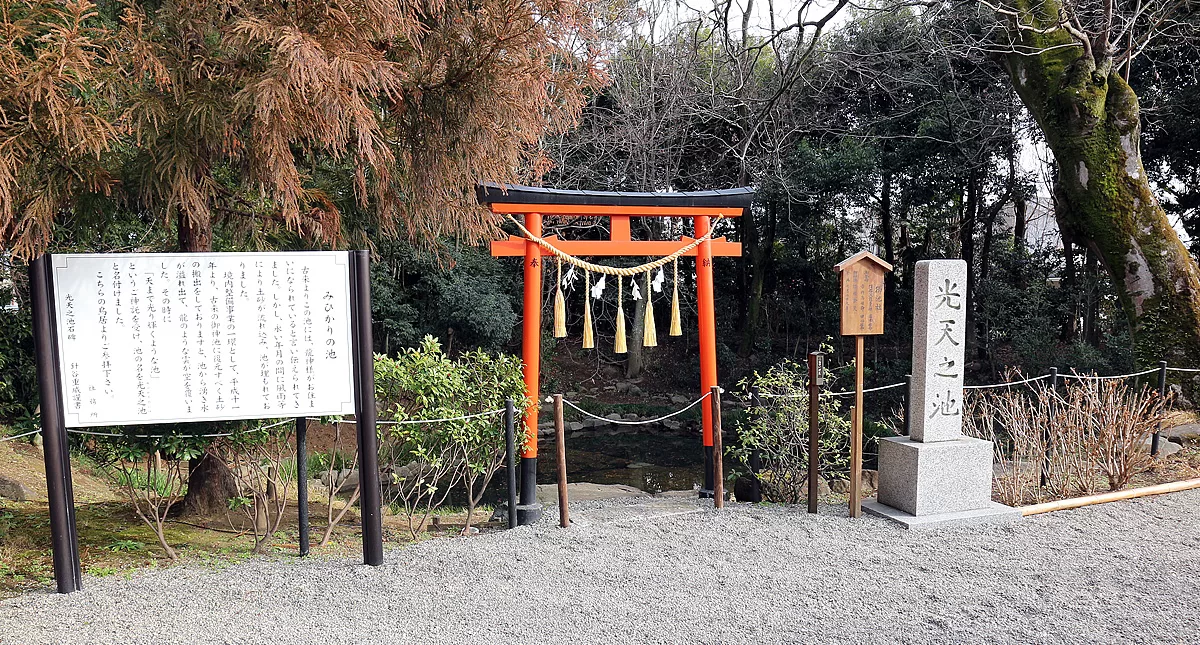
Mihikari Pond(光天之池:みひかりのいけ)
Located within the grounds of Washinomiya Shrine, this is a sacred pond where legend has it that the dragon god lives.
This pond has existed for a long time, but over time, soil and sand gradually flowed onto the water surface, and it was buried underground for a long time. However, as part of a temple grounds development project that began in 1999, restoration work and removal of the soil were carried out on the temple grounds, including this spot. The pond was given the name Hikaritennoike (Light-Heaven Pond) after an anecdote that a dragon-like mist would gush out along with the spring water and cover the sky.

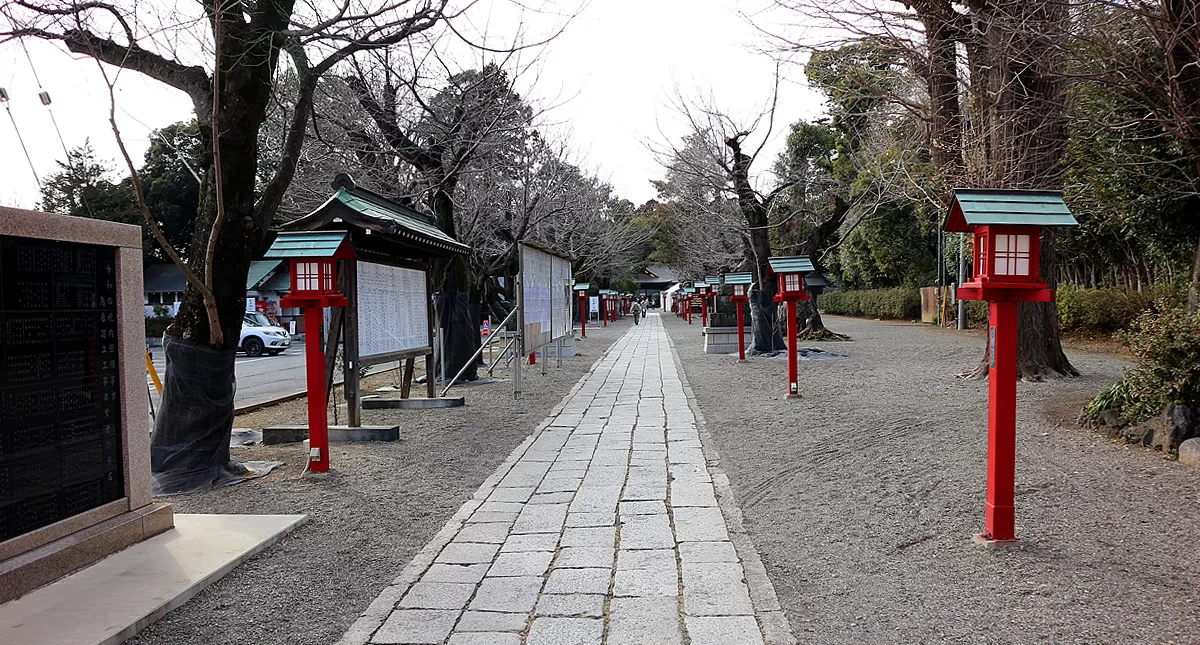
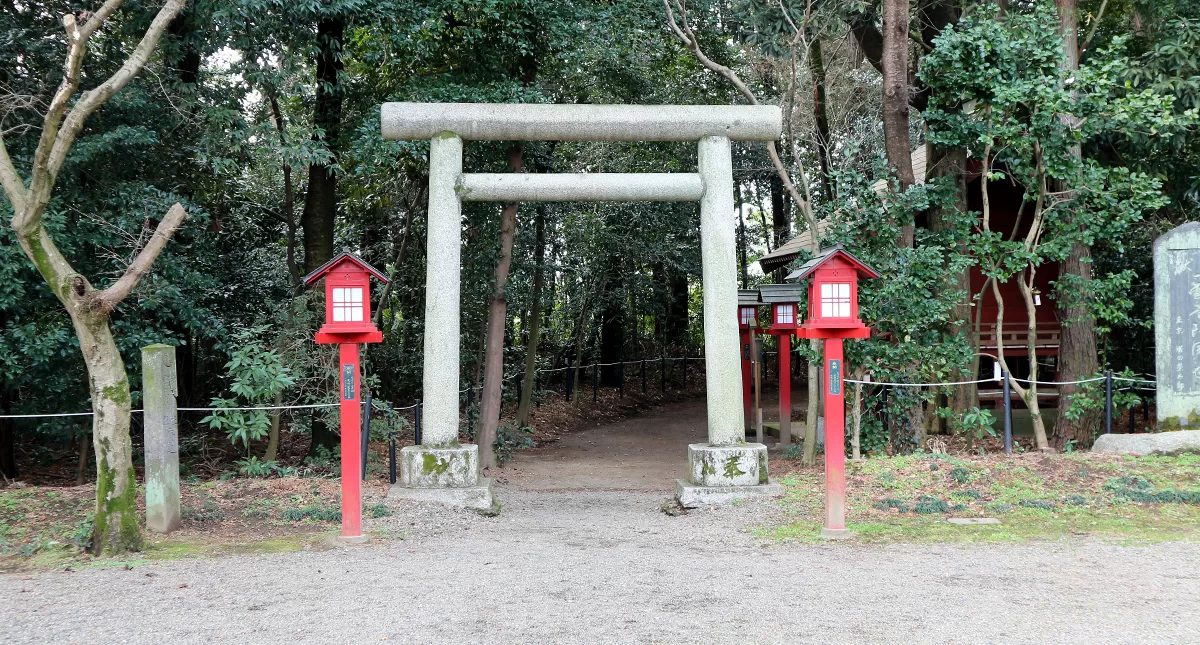
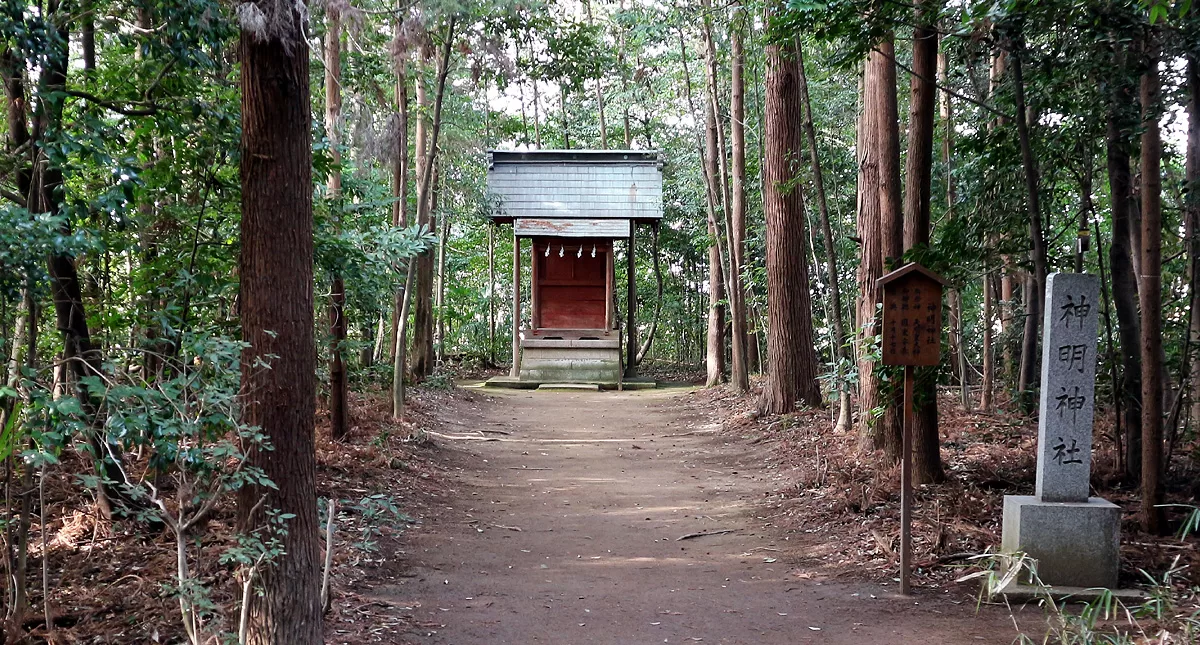
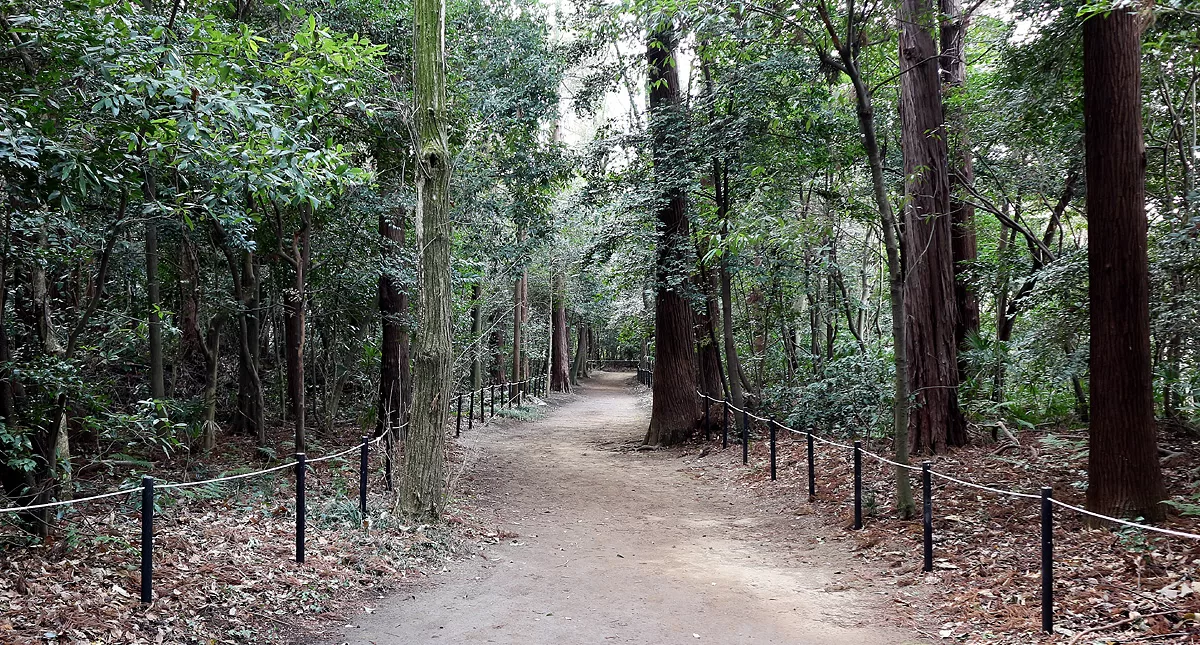
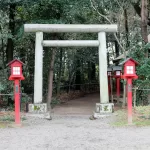
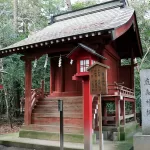
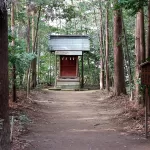
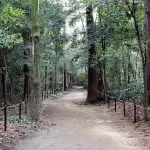
※Shrine Forest(鎮守の森:ちんじゅのもり)
When you walk through the shrine’s “sacred forest,” you feel your body fill with energy and your mind calm.
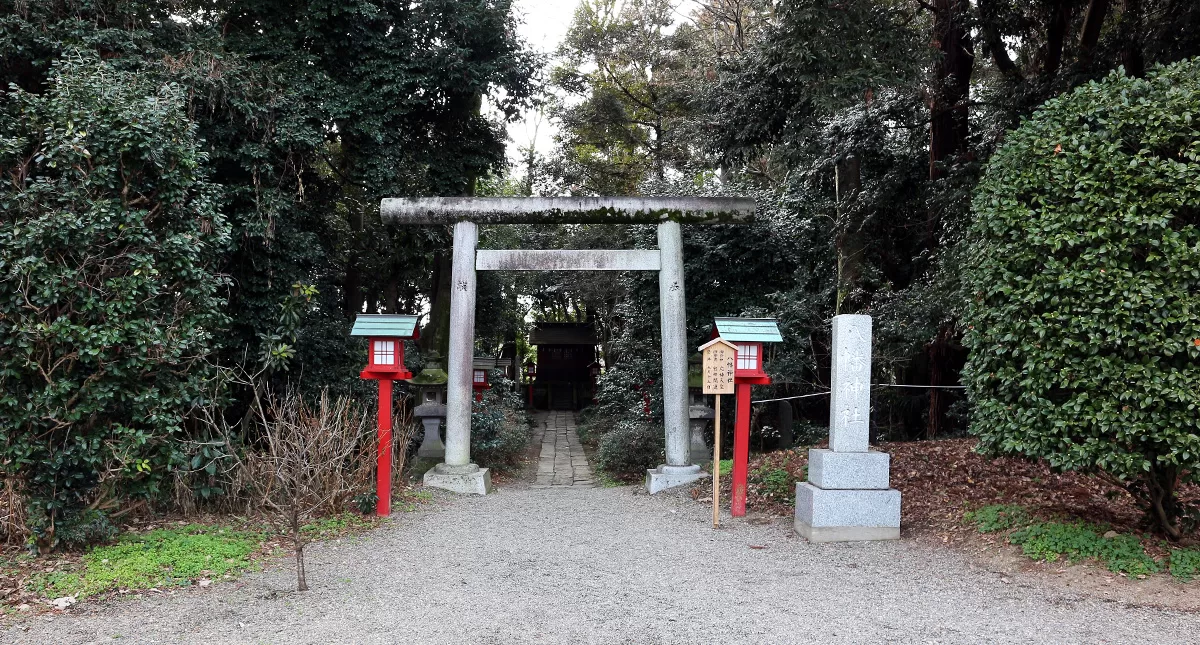
There is Kashima Shrine and Shinmei Shrine at the very back, and although they are well maintained, they are in the middle of nature, so you will get bitten by mosquitoes.
※What is Chinju no Mori(鎮守の森(ちんじゅのもり))?
In Japan, this refers to forests that are established and maintained within the grounds or surrounding areas of shrines (guardian deities(鎮守神)) and surround the shrine, approach to the shrine, and place of worship; they are also called ‘Chinju no Mori’ (Guardian Forests(ちんじゅのもり)).
In ancient Shinto, this refers to a forest where the god Kamunabi (or Kannabi) resides, and is also called Kamishiro (the Age of the Gods) or Kamishiro (the Ancient Age).




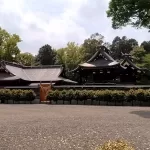
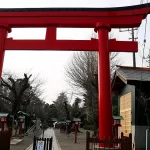


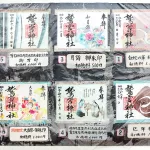
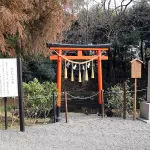


How did I, a person with no religious faith, find out about Washinomiya Shrine? I was searching the internet for “cool goshuin” (stamps), and my eye was caught by the goshuin papers shaped like Japanese swords and white snakes.
Sorry for being rude.(;´・ω・)
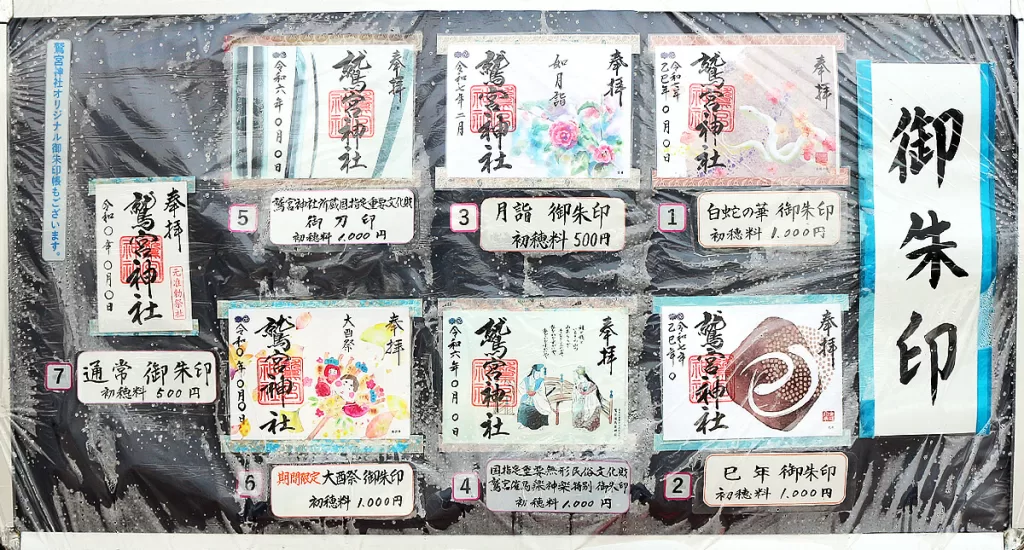
2025年4月下旬 撮影、月によって御朱印紙は変わるそうです。
Numbers 1 to 6 will be distributed as goshuin paper.
I went during reception hours because number 7 will write the stamp directly in your goshuin book.
(9:00-12:00 and 13:00-15:30.)
There are so many types that it’s hard to choose.(;^ω^)
There are also goshuin stamps for each month, so those who collect goshuin stamps will probably want to visit every month.
The one I chose was number 1, “白蛇の華御朱印 White Snake Flower Stamp (double-page spread): Brings good fortune.”
In Japan, there has been a belief in the sanctity of snakes since ancient times, and this belief dates back to the Jomon period.

In the past, there was a custom of treating snakes in the home as guardian deities and bringing good luck.
Snakes have been regarded as sacred creatures, both as guardians of property and as symbols of vitality and regeneration, as they eat mice and other pests.
White snakes have been worshipped since ancient times as messengers of the gods, especially as gods of financial luck, business prosperity, and academic success.
The stamp I was unsure about getting was number 5, the “Gosyo-in (a sword designated as an Important Cultural Property by the National Government, owned by Washinomiya Shrine) Gosyo-in (double-page spread)”!
Why is it a Japanese sword goshuin paper?
This sword, designated as an Important Cultural Property by the government, bears the inscription “Binokuchi resident Yoshitsugu”, and was donated by Oyama Yoshimasa in 1376.
The front of the sword bears the inscription “Washiyama Daimyojin, Otasho, Bushu”, the back bears the inscription “Yoshimasa, 19th day of the Rabbit month, 2nd year of the Eiwa era”, and the handle bears the inscription “Binokuchi resident Yoshitsugu”. The original has been entrusted to the Tokyo National Museum, and a replica is on display at the Kuki City Local History Museum.
In recent years, anime Lucky Star『らき☆すた』[Wikipedia] It is famous as a setting, and I knew it as a pioneering shrine for anime pilgrimages.
I have never seen “Lucky Star” and don’t know what it’s about. I’ll take a look at it next time.
It seems they are also putting effort into revitalizing the town of Washinomiya in Kuki City, so if you are interested or would like more details, please check the website of the Washinomiya Branch of the Kuki Chamber of Commerce and Industry.
Kuki City Chamber of Commerce and Industry Washinomiya Branch: Home page
http://www.wasimiya.org/[Kuki City Chamber of Commerce and Industry Washinomiya Branch: Home page]Please note that restrooms have set operating hours.
They are usually open until 4:30 p.m.
There is a parking lot, but it gets crowded during festivals and parking becomes unavailable.
During the first three days of the New Year and the Haji Festival, traffic restrictions are in place on the surrounding roads and it is not possible to enter the parking lot.
Due to these traffic restrictions, local buses will also be taking temporary detour routes instead of their usual routes, and temporary bus stops will be set up outside Washinomiya Shrine.
Kuki City Hall: Home page
http://www.city.kuki.lg.jp/ [Kuki City Hall: Home page]Next time I’m in the area, I’d like to get some goshuin paper that I’ve been interested in.
Thank you for watching.