Sunflower – Himawari –
このサイトはアフィリエイト広告を利用しています。 This site uses affiliate advertising.
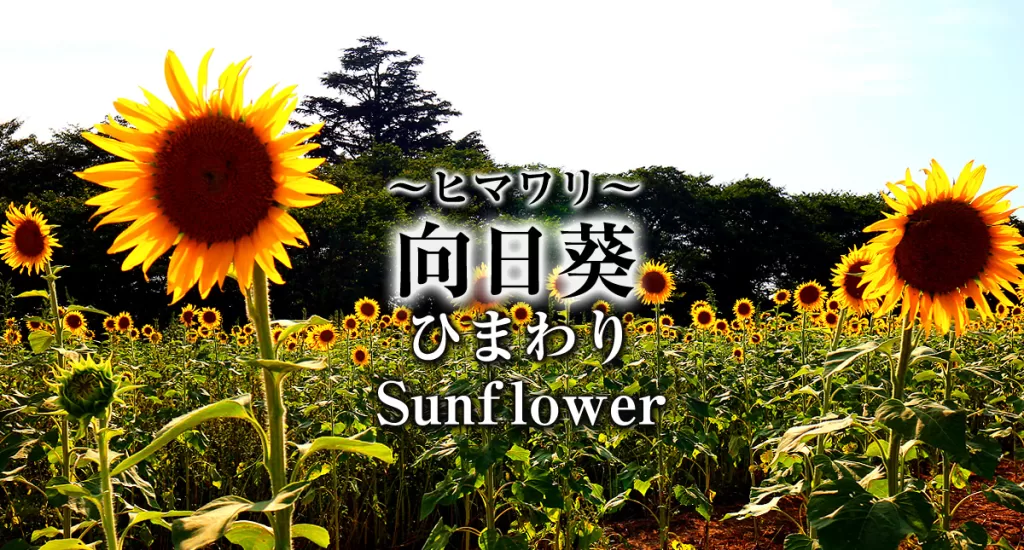
2025年8月上旬 撮影:埼玉県 権現堂公園-ひまわりまつり-
Sunflower – Himawari : ひまわり (向日葵) –
Table Of Contents
- Japanese sunflower flowering season
- Sunflower fields across Japan (excerpt)
- Sunflower fields in Hokkaido (北海道)
- Sunflower fields in Tohoku (東北)
- Sunflower fields in Kanto (関東)
- Sunflower fields in Koshinetsu (甲信越)
- Sunflower fields in Hokuriku (北陸)
- Sunflower fields in Tokai (東海)
- Sunflower fields in Kansai (関西)
- Sunflower fields in the Chugoku region (中国地方)
- Kyushu sunflower fields (九州)
- The introduction of sunflowers to Japan
- Note
Japanese sunflower flowering season
In Japan, sunflowers generally bloom from July to August.
The best time to see the flowers is usually from late July to early August, but depending on the location and variety, they can sometimes be enjoyed until around September.
I thought I’d post this since there are still some places to enjoy even after early August has passed.
In Hokkaido and Saga Prefecture, there are places where you can see sunflowers from September to November.
When I looked into it,”Tourist Farm Flower Plaza「観光農園花ひろば」” in Minamichita Town, Chita District, Aichi Prefecture I was surprised to learn that the park is known for its long blooming season, with 140,000 sunflowers in full bloom from late June to early December!
(;・∀・)Here you can experience seasonal flower picking and fruit picking.
The more you research Japan, the more you realize there are many things even Japanese people don’t know.
Even if you can’t enjoy it in 2025, I hope this will be helpful so that you can continue to enjoy it next year and beyond.
Sunflower fields across Japan – late June to early December –
*As this is a personal investigation, the details may be incorrect.
This information is based on information from August 2025, so please check the respective websites for information after that date.
There are free and paid facilities.
Sunflower fields in Hokkaido (北海道)
Nayoro City, Hokkaido: Nayoro Sunflower Fields(なよろひまわり畑)
Best time to see: Early to mid-August
Address: 147 Nisshin, Nayoro City, Hokkaido, 096-0066
The Nayoro Sunflower Fields in Nayoro City, Hokkaido, are large-scale sunflower fields that spread across the city, centered around the Prefectural Sun Pillar Park.
Approximately 5 million sunflowers bloom in full bloom, with the best viewing time being from early to mid-August.
At Hokkaido Sun Pillar Park, approximately 300,000 sunflowers will bloom over an area of 3 hectares (approximately 0.6 times the size of the Tokyo Dome).
Hokkaido Prefectural Sun Pillar Park Official Website
Hokuryu Town, Uryu District, Hokkaido: Hokuryu Town Sunflower Village(北竜町ひまわりの里)
Best time to see: Early August
Address: Itaya Sunflower Village, Hokuryu-cho, Uryu-gun, Hokkaido 078-2511
It is said to be a small town with a population of just 1,600 people, but it is said to have a vast expanse of land that stretches out as far as the eye can see and warm stories of the people who live there.
Number of days: Approximately 30 days, area: Approximately 23 hectares, number of trees: Approximately 2 million.
The parking lot, which was previously free to use, will start charging a parking fee from 2025.
Rates (per day) = Standard cars (including light vehicles): 500 yen, large buses, minibuses, camper vans: 2,000 yen, motorcycles: 100 yen
Hokuryu Town Portal Official Website
Sunflower fields in Tohoku (東北)
Osaki City, Miyagi Prefecture: Sunflower Hill(ひまわりの丘)
Best time to see: Late July to mid-August
Address: 63-13 Omamezaka, Sanbongi, Osaki City, Miyagi Prefecture, 989-6321
The hill, which has a cultivation area of about 6 hectares, is covered with rape blossoms in spring and about 420,000 sunflowers in summer.
Parking fees: Standard cars: 700 yen/car, medium-sized cars: 2,000 yen/car, large cars: 3,000 yen/car
*Those who bring their parking ticket to the snack corner at the Sanbongi Yamanami Roadside Station will receive a free cup of coffee (2025).
Roadside Station Sanbongi Yamanami Official Website
Kitakata City, Fukushima Prefecture: Sannokura Plateau Sunflower Fields(三ノ倉高原ひまわり畑)
Best time to see: Early to late August
Address: 857-1 Aida Kitagongenmoriko, Atsushiokanocho, Kitakata City, Fukushima Prefecture, 966-0108
Kitakata City has abundant floral resources that have been nurtured through its rich nature and long history, allowing you to enjoy flowers of all seasons.
In order to let more people know about the charm of flowers and to attract more visitors, they are promoting “flower tourism.”
Kitakata City Hall Official Website
Sunflower fields in Kanto (関東)
Nogi Town, Shimotsuga District, Tochigi Prefecture: Sunflowers of Nogi(野木のひまわり)
Best time to see: Mid-July to late July
Address: Nogi-cho, Shimotsuga-gun, Tochigi Prefecture, 329-0114
In the midsummer sun, the whole town is filled with sunflowers.
The annual Sunflower Festival, a summer tradition in Nogi Town, the town of flowers and bricks, will be held on a weekend in July in 2025.
Approximately 300,000 flowers will be in full bloom in the sunflower field, which covers an area of approximately 4.3 hectares.
Nogi Town, Tochigi Prefecture Official Homepage
Midori City, Gunma Prefecture: Sunflower fields(ひまわりの花畑)
Best time to see: late September to mid-October
Address: 2556 Kasakakecho, Midori City, Gunma Prefecture, 379-2313
At the sunflower fields in the Fukiage district of Kasakake town, you can enjoy the summertime sunflowers in autumn. The sunflower fields began in 1996 when the local Kamishikada Village Development Promotion Council planted seeds on unused farmland.
The Sunflower Field Festival will be held in early October when approximately 200,000 sunflowers bloom.
Midori City Tourism Association Official Homepage
Sakura City, Chiba Prefecture: Sakura Hometown Square(佐倉ふるさと広場)
Best time to see: Mid-July
Address: 2175-1 Usuida, Sakura City, Chiba Prefecture, 285-0861
It seems that the “Windmill Sunflower Garden” will not be held in 2025.
Due to renovation work at Sakura Furusato Square, the event will be suspended for a while from 2025.
The renovation work is scheduled to continue until the end of fiscal year 2028. Although no events will be held, sunflowers are apparently being planted in some areas.
Sakura City Official Website
Tokyo: Tachikawa City and Akishima City National Showa Memorial Park(立川市・昭島市 国営昭和記念公園)
Best time to see: Early August to mid-August
Address: 3173 Midoricho, Tachikawa City, Tokyo 190-0014
The hybrid sunflower variety, which grows taller than an adult, only has a short peak viewing period of about a week, so they have also introduced varieties with different peak viewing periods so that you can enjoy the flowers for a longer period.
There are other flowers and plants worth seeing, so I would like to go there someday.
Admission and parking fees apply, please check the website for details.
Showa Memorial National Government Park website
Kanagawa Prefecture: Zama City Sunflower Festival(座間市ひまわりまつり)
Best time to see: Mid-August
Address: Nittajuku, Zama City, Kanagawa Prefecture, 252-0026
Sunflowers in Zama City are usually at their best in mid-August, and during the Zama City Sunflower Festival, approximately 550,000 sunflowers are in full bloom. During the festival, there will be stalls, an observation deck, and sales of cut sunflowers and agricultural products.
Zama City has several sunflower fields in the city, and the flowering period varies depending on the location, so you can enjoy the sunflowers for a long period of time.
Zama City Tourism Association Homepage
Saitama Prefecture: Gongendo Sunflower Festival(権現堂ひまわりまつり)
Best time to see: Early to mid-August
Address: Gongendo, Satte City, Saitama Prefecture, 340-0112
Event period: Saturday, August 2nd, 2025 to Monday, August 11th (national holiday)
*The period may change depending on the flowering situation.
Location: Gongendo No. 4 Park (Satte Gongendo Sakura Tsutsumi)
Admission: Free
Saitama Prefecture: Introduction article for Gongendo Park’s “Sunflower Festival”
Satte City Tourism Association Homepage
Sunflower fields in Koshinetsu (甲信越)
Tsunan Town, Nakauonuma District, Niigata Prefecture: Tsunan Sunflower Square(津南ひまわり広場)
Best time to see: Late July to mid-August
Address: Akazawa, Tsunan-machi, Nakauonuma-gun, Niigata Prefecture, 949-8203
Event period: August 1st to August 24th, 2025 9:00am – 5:00pm, Paid parking available
Approximately 500,000 sunflowers in full bloom!
The sight of the sunflowers blooming in the bright summer sun in the vast fields is truly a breathtaking “sea of sunflowers” and a “summer tradition” in Tsunan.
In order to allow visitors to enjoy the best viewing period over a long period of time, the field (4 hectares) has been divided into three areas and the blooming periods have been staggered.
Tsunan Town Tourism Association Official Website
Hokuto City, Yamanashi Prefecture: Akeno Sunflower Field(明野ひまわり畑)
Best time to see: Late July to mid-August
Address: 5664 Asao, Akeno-cho, Hokuto City, Yamanashi Prefecture, 408-0201
Akeno Town in Hokuto City, Yamanashi Prefecture, is said to boast some of the longest hours of sunshine in Japan.
Every year, locals sow sunflower seeds,
and 400,000 flowers bloom, creating a spectacular 360-degree panorama.
During the Hokuto City Akeno Sunflower Festival, there are plenty of events, including a free stroll through the 4-hectare sunflower field, food stalls selling local specialties, and a photo contest.
Hokuto City Hall, Industry and Tourism Department, Tourism Division
Yamanakako Village, Minamitsuru District, Yamanashi Prefecture: Yamanakako Flower Park(山中湖花の都公園)
Best time to see: Mid-August to late August
Address: 1650 Yamanaka, Yamanakako Village, Minamitsuru District, Yamanashi Prefecture, 401-0501
There is an admission fee to enter Seiryu-no-Sato, a paid area within the Flower Park. Seiryu-no-Sato is home to Myojin Falls, a water play area, and the Floral Dome Furara.
From mid- to late August, approximately 100,000 sunflowers bloom against the backdrop of the majestic Mount Fuji. The park is divided into the free “Flower Fields and Farm Area” and the paid “Seiryu no Sato” area, and the sunflower fields can be viewed for free.
Lake Yamanaka Flower Park Official Website
Sunflower fields in Hokuriku (北陸)
Tsubata Town, Kahoku District, Ishikawa Prefecture: Kahokugata Reclaimed Land Sunflower Village(河北潟干拓地ひまわり村)
Best time to see: Mid-August to late August
Address: 395 Koto, Tsubata-machi, Kahoku-gun, Ishikawa Prefecture, 929-0328
In order to help children experience affection for the water and soil of their hometown and a love for agriculture, nursery school children planted sunflower seeds and opened the “Sunflower Village” in 1995.
Every year, seeds are sown in late May, and the opening ceremony for Sunflower Village is held in late July, when the sunflowers are in full bloom.
The “Sunflower Village Maze” is a seasonal feature of Sunflower Village that can be enjoyed by adults and children together.
Kahokugata Reclamation Land Improvement District Official Website
Sunflower fields in Tokai (東海)
Minamichita Town, Chita District, Aichi Prefecture: Flower Plaza Tourist Farm(観光農園花ひろば)
Best time to see:Late June to early December
Address: 48 Toyooka Takamidai, Minamichita-cho, Chita-gun, Aichi Prefecture, 470-3411
Sunflowers are a symbol of summer in Japan, and at Sunflower Tourist Farm you can enjoy them until December, making it the longest-lasting place in Japan.
(・□・;)I didn’t know!
The large grounds are covered with gentle hills, making it a tourist facility where you can enjoy flowers of all seasons.
Admission fee: Paid, free parking available, opening hours available, please check the website for details.
Hana Hiroba Tourist Farm Official Website
Sunflower fields in Kansai (関西)
Sayo Town, Sayo District, Hyogo Prefecture: Sayo Town Nanko Sunflower Fields(佐用町南光ひまわり畑)
Best time to see: Early July to early August
Address: 301 Hayashizaki, Sayo-cho, Sayo-gun, Hyogo Prefecture, 679-5212
A total of approximately 740,000 sunflowers will bloom at different times and locations in four districts of the Nanko region.
All sunflower fields will close on August 10th, 2025, so please use this as a reference when planning for next year.
There are Hayashizaki district, Higashitokuhisa district, Urushino/Honmura district, Urushino/Dan district, so please check the Sayo Town website for details.
Sayo Town Homepage
Sunflower fields in the Chugoku region (中国地方)
Miyoshi City, Hiroshima Prefecture: Kimida Sunflower Fields(君田のひまわり畑)
Attaka Village River and Sunflower Festival
July 27, 2025
Address: 347-4 Ishihara, Kimita-cho, Miyoshi City, Hiroshima Prefecture, 728-0404
Event time: 9:00-15:00
Venue: Hitsuda, Okinohara Fureai Park, Ishihara Venue, Kimida Onsen Mori no Izumi Venue
The sunflower fields were planted throughout the town using converted fields, and the total area of approximately 6 hectares in the Fujikane and Ishihara districts is the largest in western Japan.
The sight of approximately 1 million sunflowers in full bloom attracts many visitors.
Miyoshi Tourism Promotion Organization Official Website
Sera Town, Sera District, Hiroshima Prefecture: Serakogen Farm(世羅高原農場)
Best time to see: Early to late August
Address: 1124-11 Besako, Sera-cho, Sera-gun, Hiroshima Prefecture, 729-3305
Admission fee: Paid (admission fee varies depending on the flowering situation), free parking.
A golden sunflower field that spreads out like an ocean.
The 65,000m² field is home to a variety of sunflowers, from the classic to the rare.
You can enjoy breathtaking views from the multiple observation decks, and there are also other attractions such as a sunflower maze and a flower-picking corner.The estimated stroll time is about 1.5 to 2 hours.
Serakogen Farm Official Website
Kyushu sunflower fields (九州)
Asakura City, Fukuoka Prefecture: Haki Sunflower Garden(杷木大ひまわり園)
Best time to see: Early to mid-September
Address: Kukimiya, Asakura City, Fukuoka Prefecture, 838-1514
A field of sunflowers stretches along National Route 386.
The number is approximately 160,000.
When the flowers are in full bloom from early to mid-September, a Sunflower Fair is held at the roadside station “Haratsuru「原鶴」” across the street.
Cut sunflowers and local specialties will be on sale.
Haratsuru Onsen is nearby.
Roadside Station “Haratsuru「原鶴」” website
Miyaki Town, Miyaki District, Saga Prefecture: Yamada Sunflower Garden(山田のひまわり園)
Best time to see: Late October to mid-November
Address:Near Yamada Waterfront Park, Minohara Samsuigawa, Miyaki-cho, Miyaki-gun, Saga Prefecture,849-0102
In the Yamada area in the northern part of Miyaki Town, you can see autumn sunflower fields for about a month starting in November.
The large, vibrant golden yellow flowers have a different charm from the summer sunflowers, and they stand out against the blue sky of late autumn and the autumn leaves of the hazel trees on Mt. Takatori, making this a tourist spot well worth seeing.
On weekends and holidays when the flowers are in full bloom, the area is bustling with camera enthusiasts and tourists hoping to capture the beautiful scenery.
Miyaki Town Tourism Association Website
*This is based on personal research, so details may be incorrect. Please check the website.
The introduction of sunflowers to Japan
Sunflowers are thought to have originated in western North America.
It has already been an important food crop for Native Americans since before the Common Era, and Indians extracted dye from the petals.
The leaves are used as food for geese, and the oil is used to make margarine and as an ingredient in paint.
In 1510, the Spaniards brought back sunflower seeds and began cultivating them in the Madrid Botanical Garden, which is also famous for being the first place to cultivate dahlias and cosmos.
It took nearly 100 years for sunflowers to be taken out of Spain, and it wasn’t until the 17th century that they were introduced to France and then to Russia. It was only once they reached Russia that their seeds were recognized as having great value.
At that timeIt is said to have been introduced to Japan in the early Edo period (17th century).
Specifically, it is believed to have been introduced from Europe via China during the Kanbun era (1661-1672).
Initially, it was called “Takegiku「丈菊」” or “Tenpai-hana「天蓋花」”, but later it was called “Himawari「日廻り」” and then “Himawari「向日葵(ひまわり)」”.
It is an annual plant of the Asteraceae family and is written in kanji as “himawari.「向日葵」”
It got its name from the fact that the flowers rotate to follow the movement of the sun.
It is a typical summer flower in Japan, with yellow flowers that bloom and its seeds used for food and oil.
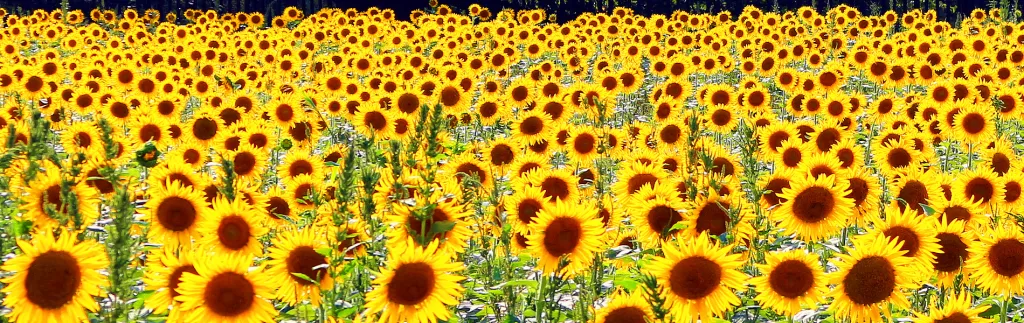
2025年8月初旬:埼玉県幸手市「権現堂公園」
There are sunflower fields all over the country, and events are held there to promote village and town revitalization as tourist destinations in Japan, and to help with recovery efforts after disasters. There are still many places in Japan where you can enjoy sunflowers, so be sure to find your favorite spot.
Note
Measures to prevent heatstroke.
I have refrained from exploring sunflowers until now.
Because summer in Japan is hot.
Although there are hotter countries around the world, it has a unique humid heat.
I’ve also come close to suffering from heat stroke in the past.
Please take care to stay hydrated and avoid the heat.
It is forbidden to touch the plants.
This can sometimes happen at cherry blossom viewing parties, where people pull on branches to get closer and take pictures of the flowers with children.
*There are some locations and periods where you can harvest during events, etc.
Do not do it anywhere other than the toilet.
There are toilets in most parks and facilities, but they are not always available, so it’s best to check beforehand.
*Even if there are no people around, it is still not okay to enter the grass.
Others
Most facilities prohibit smoking, so please do so in designated smoking areas.
*If there is no smoking, the entire area is non-smoking.
There are bees and insects
If there are flowers, bees will come, and even if there are no flowers, there are hornets and other insects. Japan is rich in water, so there are many mosquitoes even outside of summer. There are also black flies (gnats and bushflies), so it is important to avoid them.
Japan is safe, but it’s dangerous for women to walk alone in parks at night.
Japan has a low crime rate worldwide, but it is not zero. It is especially dangerous for women to walk alone at night, so please be careful. Self-avoidance is important.
The date of flowering varies considerably from year to year depending on the weather, so even if you live in Japan, it is impossible to predict when the flowers will bloom.
I posted this in the hope that it will be of some help to those who are looking forward to seeing Japanese sunflowers.
I would also like to add some places that I have actually been to.
Thank you for watching.